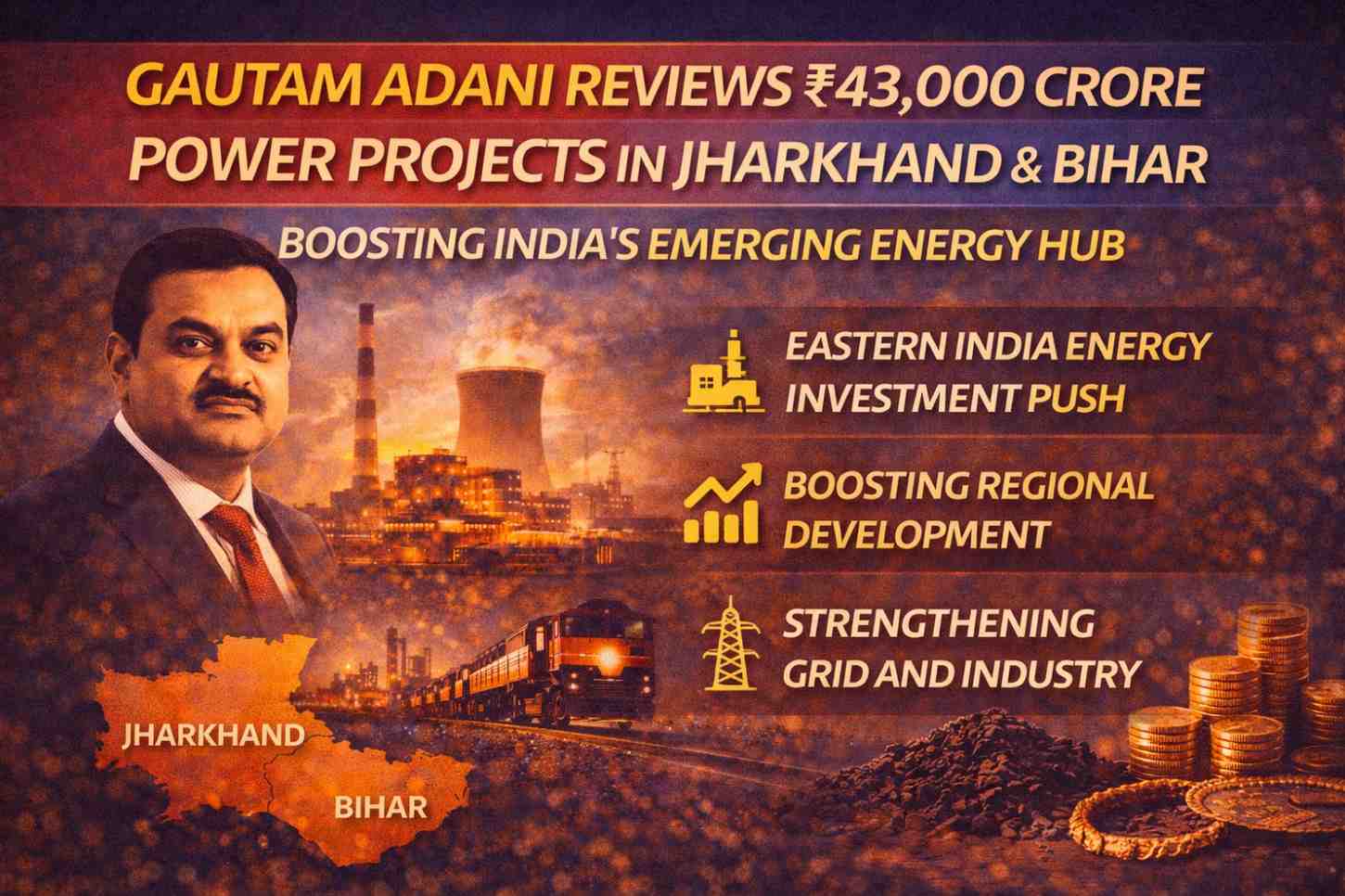
A major investment push in eastern India’s power sector has come into focus after Gautam Adani reviewed large-scale energy projects worth approximately ₹43,000 crore across Jharkhand and Bihar. The review signals the Adani Group’s continued expansion in power generation and infrastructure as India seeks to strengthen electricity supply and industrial growth.
The projects are part of a broader strategy to develop eastern India as a significant energy and industrial corridor. With power demand rising across the country—driven by urbanisation, manufacturing growth, and electrification—investments in generation and transmission infrastructure have become a central pillar of India’s economic planning.
Industry observers say the scale of these projects could play a crucial role in boosting regional development, strengthening grid capacity, and supporting long-term industrial expansion in states that have historically lagged in infrastructure investment.
Large Power Investments in Eastern India
The ₹43,000 crore investment plan involves multiple energy projects across the states of Jharkhand and Bihar. Both states have significant energy requirements due to expanding industrial zones, mining activity, and growing urban populations.
Eastern India is strategically important for India’s energy sector for several reasons:
- Presence of coal reserves used in thermal power generation
- Proximity to mineral resources and heavy industries
- Rising electricity demand from manufacturing hubs
- Infrastructure expansion including railways, highways, and industrial corridors
The power projects under review are expected to strengthen electricity availability and support economic development across the region.
Strategic Importance of Jharkhand’s Power Sector
Jharkhand plays a key role in India’s energy landscape because of its abundant coal reserves and industrial base. The state hosts major steel plants, mining operations, and manufacturing facilities that require reliable power supply.
Energy infrastructure investments in Jharkhand often focus on:
- Thermal power plants
- Transmission networks
- Coal supply logistics
- Industrial power distribution
By expanding generation capacity and improving infrastructure, companies aim to ensure stable electricity supply for both industrial and residential consumers.
Power projects in the state also support India’s broader manufacturing ambitions by ensuring that energy shortages do not hinder industrial growth.
Bihar’s Growing Electricity Demand
Electricity demand in Bihar has grown steadily over the past decade as electrification programs, urbanisation, and infrastructure development accelerate.
Historically, Bihar has faced challenges related to power shortages and limited generation capacity. However, recent years have seen improvements in electricity access and grid connectivity.
Large-scale investments in power infrastructure could help the state:
- Expand electricity availability in rural areas
- Support industrial development
- Strengthen transmission networks
- Improve reliability of supply
For businesses considering investments in Bihar, stable energy availability remains a key factor in long-term planning.
Adani Group’s Expanding Energy Portfolio
The review of projects in eastern India reflects the continued expansion of the Adani Group in the energy sector.
The group operates across multiple segments of India’s energy ecosystem, including:
- Thermal power generation
- Renewable energy projects
- Transmission infrastructure
- Coal supply chains
- Energy distribution networks
In recent years, the conglomerate has also increased its investments in renewable energy as part of India’s transition toward cleaner energy sources.
At the same time, conventional power plants continue to play a role in meeting base-load electricity demand, particularly in regions with rapidly growing industrial activity.
Power Infrastructure and India’s Industrial Growth
India’s economic expansion has placed increasing pressure on its energy infrastructure. Reliable electricity supply is essential for sectors ranging from manufacturing and transportation to digital services and urban development.
Large power projects like those being reviewed in Jharkhand and Bihar are often designed to support long-term industrial growth.
Key economic benefits typically include:
Supporting Manufacturing Expansion
Manufacturing facilities require consistent and affordable electricity. Energy shortages or unreliable supply can disrupt production and discourage investment.
Power infrastructure development helps create a more stable environment for industries to operate and expand.
Strengthening Regional Development
Eastern India has historically received less industrial investment compared with western and southern regions.
Large infrastructure projects—including power plants and transmission lines—can help balance regional development by improving economic opportunities in states such as Jharkhand and Bihar.
Creating Employment Opportunities
Major energy projects generate employment during both construction and operational phases.
Jobs are created in areas such as:
- Engineering and construction
- Equipment manufacturing
- Logistics and supply chains
- Plant operations and maintenance
These projects can also stimulate indirect employment in surrounding communities.
Role of Energy Projects in India’s Power Strategy
India’s power sector is undergoing significant transformation as the country works to meet rising electricity demand while expanding renewable energy capacity.
Government policy emphasizes a balanced approach that includes:
- Expanding renewable energy generation
- Strengthening grid infrastructure
- Ensuring reliable base-load power
- Encouraging private sector investment
Large private-sector investments remain critical for financing and executing energy infrastructure projects.
Companies like the Adani Power and other private power producers have played a growing role in expanding generation capacity across India.
Challenges Facing Large Power Projects
Despite the potential economic benefits, large-scale power projects often face several challenges.
Land and Environmental Clearances
Infrastructure projects require multiple regulatory approvals related to land acquisition and environmental compliance. These processes can sometimes delay project timelines.
Financing and Investment Risks
Power projects involve significant capital investment and long development cycles. Companies must carefully manage financing structures and market risks.
Balancing Energy Transition Goals
India is simultaneously expanding renewable energy while maintaining conventional power capacity.
Balancing these priorities requires careful planning to ensure energy security without compromising environmental commitments.
Eastern India’s Emerging Energy Hub
The review of projects worth ₹43,000 crore highlights the increasing importance of eastern India in the country’s energy strategy.
With coal reserves, industrial resources, and improving infrastructure, the region has the potential to become a major energy and manufacturing hub.
States such as Jharkhand and Bihar are working to attract investment in power, logistics, and industrial infrastructure as part of broader economic development plans.
If successfully implemented, large power projects could help transform the region’s economic landscape by strengthening electricity supply and supporting industrial growth.
Conclusion
The review of ₹43,000 crore worth of power projects by Gautam Adani underscores the scale of investment being directed toward India’s energy infrastructure.
As electricity demand continues to rise, projects in Jharkhand and Bihar could play a significant role in strengthening regional power supply and enabling industrial expansion.
For eastern India, these developments represent more than just infrastructure investment—they signal the region’s growing importance in India’s broader economic and energy strategy.
Whether these projects ultimately deliver their full potential will depend on execution, regulatory approvals, and the evolving dynamics of India’s energy transition.
About the Author