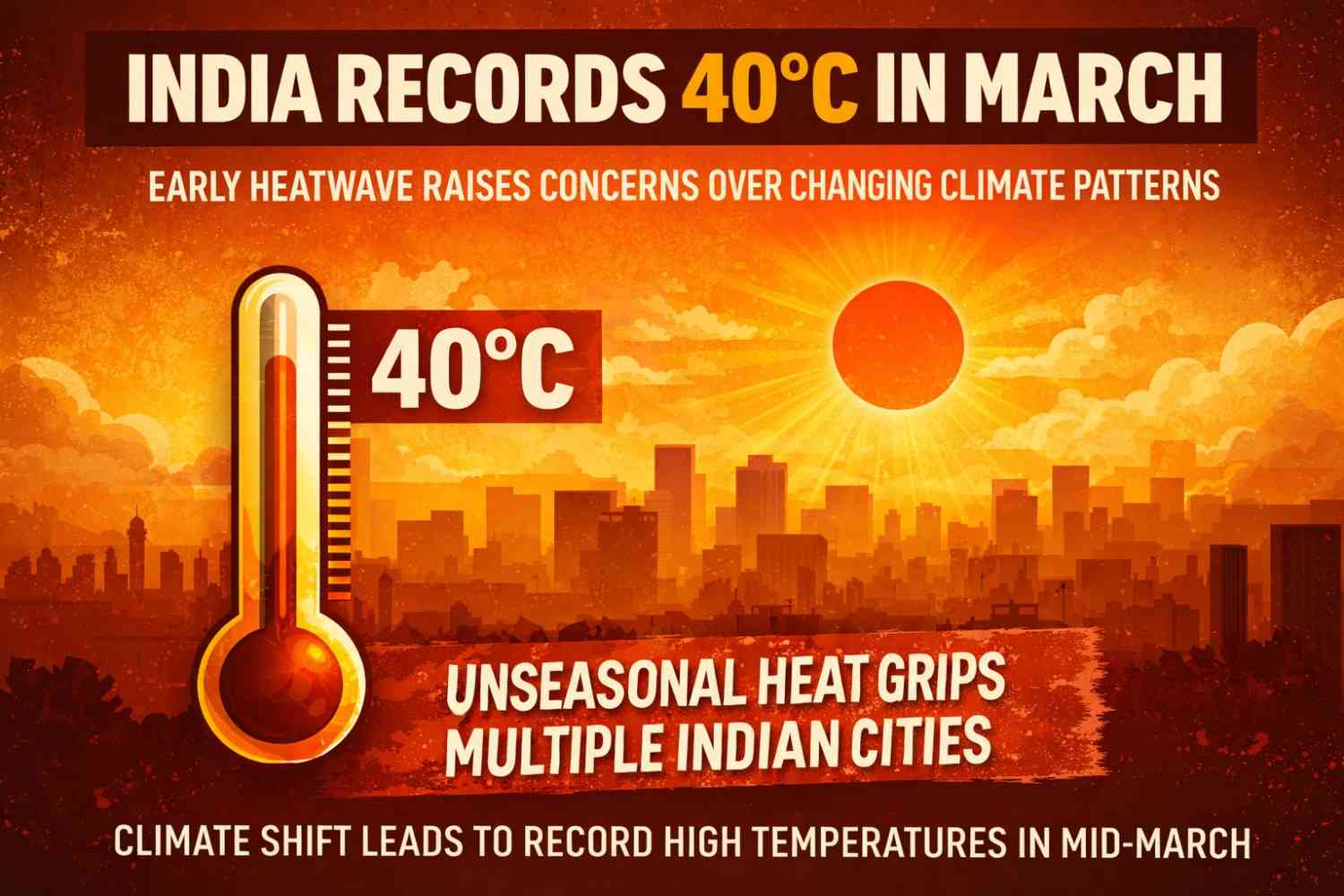
Unseasonal Heat Grips Multiple Indian Cities
India is witnessing an unusually early onset of extreme heat, with temperatures in several major cities already touching or crossing the 40°C mark in mid-March. Regions including Delhi, Mumbai and Ahmedabad have reported temperatures significantly above seasonal averages, raising concerns among meteorologists, public health experts and policymakers.
Traditionally, March in India marks the transition from winter to summer, with moderate temperatures and relatively stable weather conditions. However, the current spike suggests a shift in seasonal patterns, prompting questions about whether the country is experiencing a structural change in its climate cycle.
Search trends across platforms show a sharp rise in queries such as “heatwave in India 2026,” “why is March so hot,” and “early summer India,” indicating widespread public concern and curiosity.
What Is Driving the Early Heatwave?
Weak Winter and Rapid Temperature Rise
One of the primary factors behind the early heatwave is a weaker-than-usual winter season. Northern and western parts of India experienced fewer cold waves this year, leading to a faster-than-normal increase in temperatures as spring approached.
Meteorological experts have pointed out that reduced western disturbances—weather systems that typically bring winter rainfall and cooler conditions—have contributed to the accelerated warming trend.
Changing Climate Patterns
Climate variability is also being closely examined as a contributing factor. While a single weather event cannot be directly attributed to climate change, the increasing frequency of such anomalies aligns with broader global warming trends.
Rising baseline temperatures mean that even minor fluctuations can push conditions into extreme territory. Warmer nights, reduced cooling periods, and prolonged dry spells are all indicators of shifting climate behavior being observed across the Indian subcontinent.
Is Spring Season Shrinking in India?
A Transition Phase Under Stress
The current situation has reignited debate over whether India’s spring season is gradually shrinking. Spring, which typically spans February to early April, is characterized by mild temperatures and plays a crucial role in agriculture, public health, and overall environmental balance.
However, in recent years, this transition period appears to be shortening, with winter giving way almost directly to peak summer conditions.
Impact on Daily Life
For millions of Indians, the disappearance of a comfortable spring season has tangible consequences. Schools, workplaces, and daily routines are being affected as people are forced to adapt to summer-like conditions much earlier in the year.
Urban areas, in particular, are experiencing intensified heat due to the “urban heat island” effect, where concrete infrastructure traps heat and raises local temperatures.
Health Risks Associated With Early Heatwaves
Rising Cases of Heat-Related Illnesses
An early and intense heatwave can significantly increase the risk of heat-related illnesses such as dehydration, heat exhaustion, and heatstroke. Vulnerable groups—including children, the elderly, and outdoor workers—are particularly at risk.
Healthcare professionals advise taking preventive measures seriously, especially as the body has not yet acclimatized to extreme summer conditions.
Public Health Preparedness
The early arrival of high temperatures also puts pressure on public health systems. Hospitals and clinics may see a rise in heat-related cases earlier than expected, requiring preparedness in terms of staffing, supplies, and awareness campaigns.
Authorities often issue advisories urging citizens to stay hydrated, avoid direct sun exposure during peak hours, and monitor symptoms of heat stress.
Economic and Agricultural Implications
Stress on Agriculture
Agriculture is one of the sectors most vulnerable to temperature fluctuations. An early heatwave can affect crop yields, especially for rabi crops such as wheat, which are sensitive to temperature changes during their growth phase.
Higher temperatures during critical growth periods can reduce grain quality and yield, potentially impacting food supply and market prices.
Energy Demand Surge
As temperatures rise earlier in the year, demand for electricity—particularly for cooling appliances such as air conditioners and fans—also increases. This can strain power grids, especially in densely populated urban areas.
Energy providers may need to adjust their supply strategies to manage peak demand periods that are arriving sooner than anticipated.
Weather Instability Across Regions
Interestingly, while some parts of India are experiencing extreme heat, others are witnessing unseasonal weather activity such as thunderstorms and rainfall. This contrast highlights increasing weather volatility.
Such variability complicates forecasting and planning, as different regions face contrasting climate challenges simultaneously. It also underscores the importance of localized weather advisories and region-specific preparedness strategies.
What Meteorologists Are Monitoring
Meteorological agencies are closely tracking temperature trends, wind patterns, and atmospheric conditions to assess whether the current heatwave will intensify or stabilize in the coming weeks.
Key factors being monitored include:
- Duration and spread of high-temperature zones
- Night-time temperature trends
- Onset timing of peak summer conditions
- Interaction with other weather systems
Early indicators suggest that above-normal temperatures may persist in several regions, though periodic weather disturbances could provide temporary relief.
How Citizens Can Stay Safe
With the likelihood of prolonged heat conditions, individuals are advised to take precautionary steps:
Personal Safety Measures
- Stay hydrated and drink water regularly
- Avoid stepping out during peak afternoon hours
- Wear light, breathable clothing
- Use protective gear such as hats or umbrellas
At Home and Workplace
- Ensure proper ventilation
- Limit use of heat-generating appliances during the day
- Check on vulnerable family members and colleagues
Awareness and early action can significantly reduce the risk of heat-related health issues.
The Bigger Picture: A Signal for Long-Term Climate Adaptation
The early heatwave of 2026 may serve as another reminder of the need for long-term climate resilience strategies in India. Urban planning, water resource management, and sustainable infrastructure development are becoming increasingly critical in the face of rising temperatures.
While immediate responses focus on managing the current situation, the broader challenge lies in adapting to a future where such extreme weather events may become more frequent.
Conclusion
India’s experience of 40°C temperatures in March highlights a growing pattern of climate unpredictability. Whether driven by short-term weather anomalies or longer-term climate shifts, the early onset of extreme heat is impacting daily life, public health, and economic activity.
As the country moves deeper into the summer months, continued monitoring, public awareness, and adaptive strategies will be essential to mitigate risks and ensure resilience in the face of evolving climate realities.
About the Author