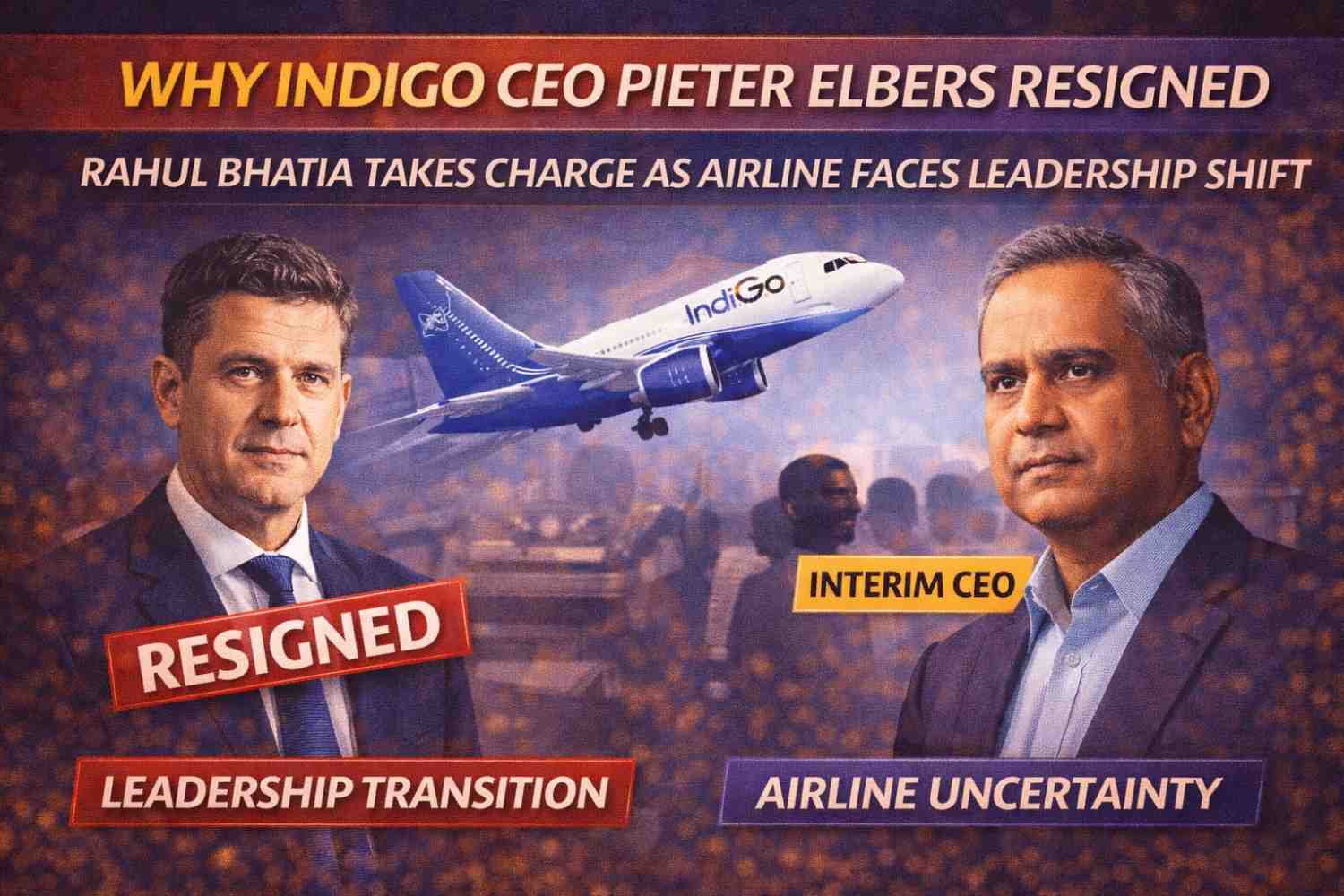
India’s largest airline is facing a sudden leadership transition after Pieter Elbers stepped down from his role as Chief Executive Officer of IndiGo with immediate effect. The unexpected resignation comes during a period of operational scrutiny for the airline following several flight disruptions and operational challenges.
In the interim, Rahul Bhatia has taken charge of the airline’s leadership, marking a temporary shift in the company’s management structure as the board begins the process of identifying a long-term successor.
The leadership change has attracted significant attention across India’s aviation sector, given IndiGo’s dominant position in the country’s domestic airline market.
Sudden Exit After Turbulent Period
Pieter Elbers’ resignation has come as a surprise to many industry observers. Since joining IndiGo in 2022, Elbers was tasked with steering the airline through an ambitious phase of expansion that included international route growth, fleet expansion, and operational modernization.
However, the airline has faced a series of operational pressures in recent months, including flight delays, scheduling disruptions, and passenger complaints during peak travel periods. While such issues are not uncommon in rapidly expanding airline networks, they have drawn increased scrutiny from regulators and passengers alike.
Elbers’ departure during this challenging phase has raised questions about the internal dynamics of the airline’s leadership and the strategic direction of the company.
Rahul Bhatia Steps In as Interim Head
Following Elbers’ exit, Rahul Bhatia has stepped in to oversee operations on an interim basis. Bhatia is one of the co-founders of IndiGo and plays a central role in the airline’s parent company, InterGlobe Aviation.
His interim leadership is expected to ensure continuity in strategic decision-making while the company evaluates long-term leadership options.
Bhatia has been closely associated with IndiGo’s growth story since its early years. Under the airline’s founding leadership, IndiGo rapidly expanded to become India’s largest carrier by market share, known for its low-cost model and operational efficiency.
Industry analysts believe Bhatia’s temporary return to operational leadership could stabilise the airline during the transition period.
IndiGo’s Dominant Position in Indian Aviation
IndiGo currently holds the largest share of India’s domestic aviation market and operates one of the biggest fleets in the region.
The airline’s strategy has traditionally focused on a low-cost carrier model, prioritising high aircraft utilisation, competitive fares, and extensive domestic connectivity. Over time, the airline has also expanded its international network, connecting Indian cities to destinations across Asia, the Middle East, and parts of Europe.
Because of its scale and influence, leadership changes within IndiGo are closely watched by industry stakeholders, investors, and regulators.
Any shift in management can potentially affect the airline’s expansion plans, operational priorities, and competitive strategy.
Operational Challenges Facing the Airline
The aviation industry globally has been navigating a complex environment marked by rising fuel costs, aircraft supply constraints, and increasing passenger demand.
For IndiGo, operational challenges in recent months have included:
- Flight scheduling disruptions
- High passenger volumes during peak travel seasons
- Aircraft maintenance and fleet management pressures
- Airport congestion at major hubs
Airlines operating at large scale often face such challenges, particularly when managing extensive domestic and international networks.
Industry experts say leadership stability becomes especially important during such periods, as management decisions can influence operational efficiency and customer experience.
Expansion Plans and Fleet Growth
Despite the current leadership transition, IndiGo continues to pursue ambitious expansion plans.
The airline has placed large aircraft orders in recent years as part of its long-term strategy to expand both domestically and internationally. Fleet modernisation and new route launches remain key pillars of its growth strategy.
IndiGo has also been exploring new long-haul opportunities and partnerships that could strengthen its global presence.
These strategic initiatives will likely remain central priorities for the airline regardless of leadership changes.
Investor and Market Reaction
Leadership changes in major corporations often trigger reactions from investors and market analysts.
In the case of IndiGo, stakeholders are expected to closely monitor how the transition affects the airline’s operational stability and financial outlook.
InterGlobe Aviation, the company that operates IndiGo, is listed on Indian stock exchanges and therefore remains under constant scrutiny from investors and regulatory authorities.
Market participants will be watching for further announcements from the company regarding the search for a permanent CEO and the broader strategic direction of the airline.
Importance of Leadership Stability in Aviation
The aviation industry is particularly sensitive to leadership transitions because airlines operate complex systems involving logistics, regulation, and international partnerships.
Strong leadership is often essential to managing fleet expansion, maintaining operational reliability, and responding to sudden challenges such as weather disruptions, technical issues, or geopolitical developments.
For IndiGo, maintaining operational consistency during the leadership transition will be crucial to sustaining passenger confidence and industry reputation.
What Comes Next for IndiGo
With Rahul Bhatia currently overseeing the airline’s operations, the focus now shifts to how IndiGo manages the transition to new leadership.
The company’s board is expected to begin the process of identifying a permanent CEO who can guide the airline through its next phase of expansion.
Industry observers believe the airline will prioritise candidates with strong aviation management experience and the ability to balance rapid growth with operational reliability.
In the short term, IndiGo’s priority will likely remain ensuring smooth flight operations, maintaining passenger confidence, and continuing its network expansion plans.
A Key Moment for India’s Largest Airline
The sudden resignation of Pieter Elbers marks a significant moment in IndiGo’s corporate journey. As the airline navigates operational challenges and an evolving aviation landscape, leadership decisions made in the coming months could shape its trajectory for years to come.
For India’s aviation sector, the development underscores how leadership transitions in major airlines can influence market dynamics, competitive strategies, and the broader direction of the industry.
With Rahul Bhatia temporarily at the helm, attention now turns to how IndiGo stabilises its leadership structure while continuing to serve millions of passengers across its rapidly expanding network.
Last Updated on: Saturday, March 14, 2026 1:21 am by Indian News Bulletin Team | Published by: Indian News Bulletin Team on Tuesday, March 10, 2026 10:49 pm | News Categories: Business
About The Author