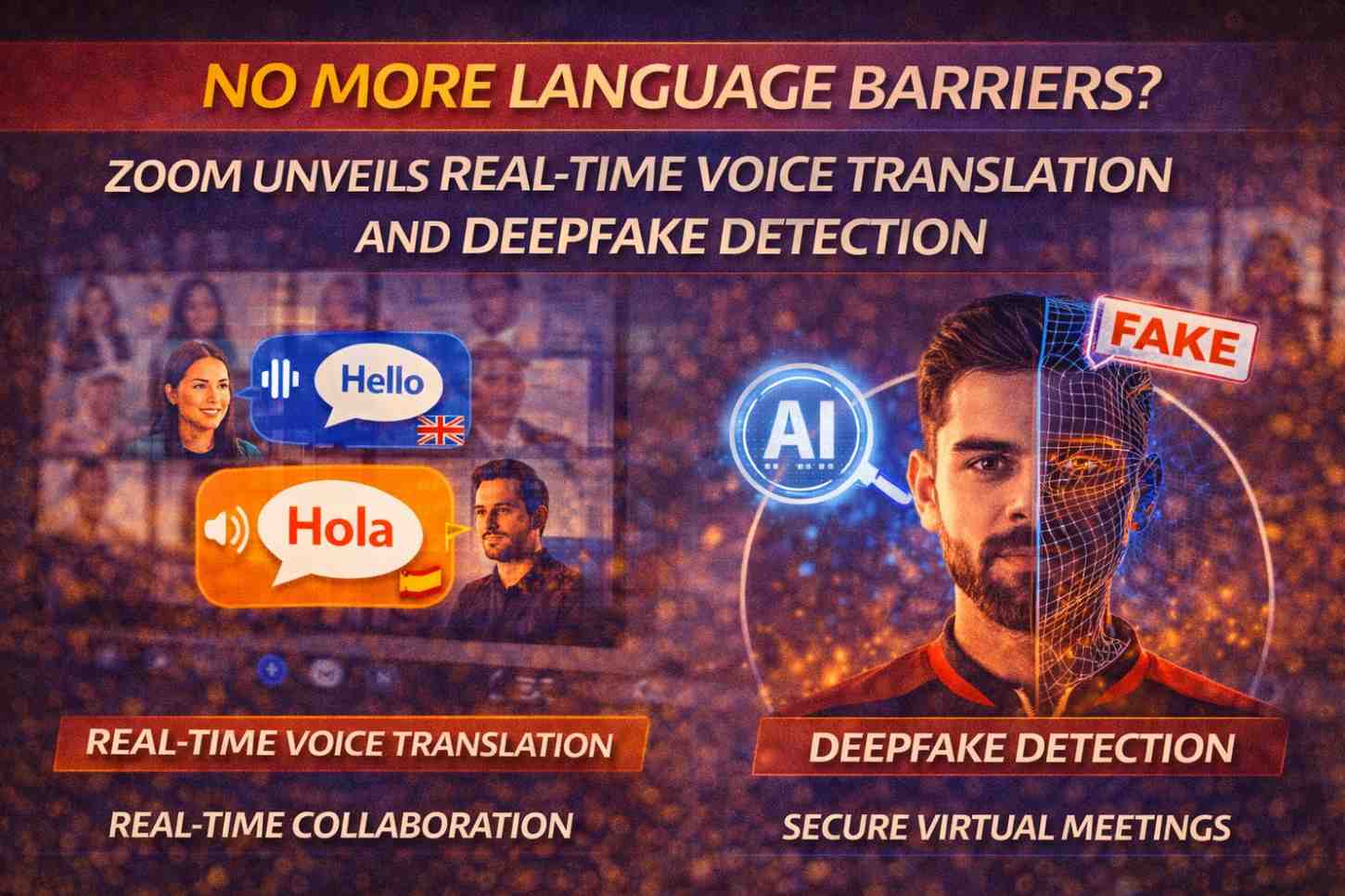
Video conferencing platform Zoom Video Communications has announced a new set of artificial intelligence features designed to transform how people communicate online. The company is introducing real-time voice translation alongside deepfake detection capabilities, marking a significant step toward more secure and accessible digital meetings.
The announcement reflects a broader push across the technology industry to integrate advanced AI tools into communication platforms. As remote work, international collaboration, and virtual events continue to grow, tools that remove language barriers and improve digital trust are becoming increasingly important.
With these new features, Zoom aims to make meetings more inclusive while also addressing rising concerns about manipulated audio and video content.
Real-Time Voice Translation: Breaking Language Barriers
One of the most notable features unveiled by Zoom is real-time voice translation, a technology that can translate spoken language during live meetings.
The feature works by using artificial intelligence to analyze a speaker’s voice in real time and generate translated speech or captions in another language. Instead of relying solely on subtitles, the system can replicate the speaker’s tone and pacing while delivering the translated version.
This capability could significantly improve communication in multinational environments where participants speak different languages.
Potential use cases include:
- Global business meetings
- International classrooms and online education
- Cross-border collaborations in research and technology
- Customer support for multinational companies
By enabling participants to hear translations instantly, Zoom hopes to make virtual conversations feel more natural and inclusive.
How the Technology Works
Real-time voice translation relies on several layers of AI technology working together:
Speech Recognition
The system first converts spoken words into text using advanced speech recognition models.
Language Processing
Natural language processing algorithms then interpret the meaning of the speech and translate it into the target language.
Voice Generation
Finally, the translated text is converted back into speech, often preserving the tone and cadence of the original speaker.
These processes occur within seconds, allowing conversations to flow with minimal delay.
The integration of voice synthesis also helps maintain a sense of personal identity during translation, which can be important for business communication and presentations.
Why This Matters for Global Collaboration
Language differences remain one of the biggest barriers to effective global communication. Even with interpreters or subtitles, conversations can lose nuance and slow down discussions.
Real-time voice translation could help solve this challenge by allowing participants to speak in their native language while others hear the translated version.
For businesses, the technology may improve:
- Efficiency in international meetings
- Accessibility for employees and clients
- Collaboration between multinational teams
Educational institutions and international conferences may also benefit, particularly when participants come from diverse linguistic backgrounds.
Deepfake Detection: Addressing a Growing Security Threat
Alongside translation tools, Zoom is also introducing deepfake detection technology to enhance meeting security.
Deepfakes—AI-generated media that can mimic a person’s face or voice—have become a growing concern in recent years. As generative AI technology becomes more advanced, the potential misuse of manipulated audio or video in professional settings has raised alarms across industries.
Zoom’s deepfake detection system is designed to analyze audio and video signals during calls to identify signs of synthetic manipulation.
The goal is to help users detect whether a participant’s identity may have been artificially altered.
Why Deepfake Protection Is Important
Deepfake technology has advanced rapidly, making it possible to create highly realistic digital impersonations. In business and government contexts, such manipulation could pose serious risks.
Potential threats include:
- Impersonation during corporate meetings
- Fraud involving financial approvals
- Disinformation campaigns
- Security breaches through fake identities
By integrating deepfake detection directly into its platform, Zoom is attempting to address these risks proactively.
The feature is expected to provide alerts when suspicious audio or video patterns are detected.
AI Integration Across Communication Platforms
Zoom’s latest announcement reflects a broader trend in the technology sector where communication tools are increasingly powered by artificial intelligence.
Companies are competing to offer smarter meeting experiences that include:
- Automated transcription
- Real-time summarization of meetings
- AI-generated action items
- Translation across multiple languages
The addition of deepfake detection signals a shift toward AI-driven safety tools, which may become a standard feature across digital communication platforms in the future.
Challenges and Ethical Considerations
While real-time translation and deepfake detection promise significant benefits, they also raise questions about privacy, reliability, and ethical use.
Experts often highlight several considerations:
- Accuracy of translation across complex languages
- Potential biases in AI models
- Handling sensitive conversation data
- False positives in deepfake detection systems
Technology companies typically address these concerns by improving AI training models, implementing security safeguards, and allowing users to control how AI features are used.
What It Means for the Future of Online Meetings
Zoom’s new features indicate that the future of digital communication will likely be AI-enhanced, multilingual, and security-focused.
Real-time translation could make global collaboration smoother than ever, while deepfake detection may become an essential safeguard against digital impersonation.
As remote work and international partnerships continue to expand, these innovations could reshape how people interact across borders.
Conclusion
With the introduction of real-time voice translation and deepfake detection, Zoom Video Communications is positioning itself at the forefront of AI-powered communication technology.
The new capabilities aim to tackle two major challenges of the modern digital world: language barriers and digital trust.
If widely adopted, these tools could make online meetings more inclusive, secure, and efficient—bringing the world closer to seamless global communication.
Last Updated on: Saturday, March 14, 2026 1:07 am by Indian News Bulletin Team | Published by: Indian News Bulletin Team on Wednesday, March 11, 2026 3:13 pm | News Categories: Technology
About The Author
