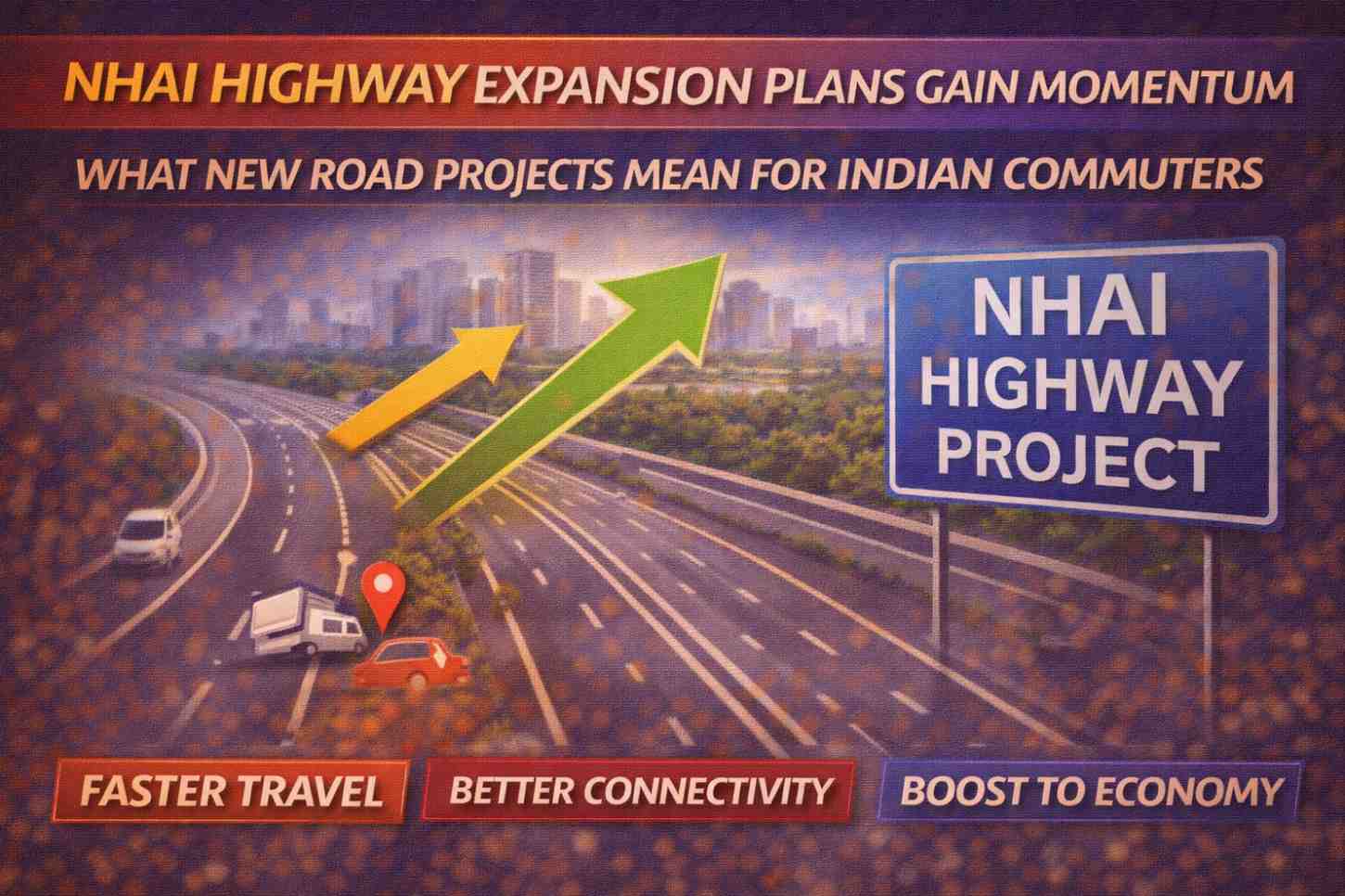
India’s highway infrastructure is entering another phase of rapid expansion as the National Highways Authority of India (NHAI) accelerates work on new expressways, highway upgrades, and connectivity corridors across the country. With growing traffic volumes, rising logistics demand, and a focus on improving mobility, national highway projects have become a central pillar of India’s infrastructure development strategy.
Several major highway construction and expansion initiatives are currently underway or in advanced planning stages, aimed at improving connectivity between cities, industrial hubs, ports, and rural areas. The projects are expected to significantly reduce travel time, improve road safety, and support economic growth by strengthening transport networks.
For everyday commuters, freight operators, and long-distance travelers, the ongoing expansion of India’s highway network could reshape the way people move across the country in the coming years.
Why Highway Expansion Is a Priority for India
India has one of the world’s largest road networks, and national highways form the backbone of long-distance transportation. Although national highways account for a relatively small percentage of the total road network, they carry a large share of passenger and freight traffic.
The National Highways Authority of India, which functions under the Ministry of Road Transport and Highways, is responsible for developing, maintaining, and upgrading national highways across the country.
As India’s economy grows and urbanisation increases, traffic demand has risen sharply. Expanding highway capacity and improving road infrastructure are therefore seen as essential for reducing congestion, improving efficiency in logistics, and supporting regional development.
Government infrastructure programmes have also prioritised highway construction to strengthen connectivity between economic zones and improve transportation access in remote regions.
Major Highway Projects Under Development
Several large-scale highway and expressway projects are currently in progress across India. These initiatives aim to enhance high-speed road connectivity between key cities and economic centres.
New Expressways
High-speed access-controlled expressways are being developed to enable faster travel between major urban hubs. These expressways typically feature multiple lanes, limited entry and exit points, and modern safety features designed for higher-speed traffic.
Such projects are expected to reduce travel time significantly compared with conventional highways.
Highway Widening Projects
In addition to building new expressways, authorities are upgrading existing highways by widening them from two lanes to four or six lanes. These upgrades help accommodate increasing traffic volumes and improve road safety by separating traffic streams.
Economic Corridors and Freight Routes
Infrastructure planners are also focusing on creating dedicated freight corridors and economic corridors that connect manufacturing hubs, ports, and logistics centres. These corridors aim to streamline the movement of goods across long distances and reduce transportation costs.
Impact on Daily Commuters and Long-Distance Travelers
For millions of people who rely on road transport every day, expanded highway infrastructure could bring several tangible benefits.
Reduced Travel Time
One of the most noticeable changes for commuters will likely be shorter travel times. Improved highways with better road design allow vehicles to travel at consistent speeds, reducing delays caused by congestion and poor road conditions.
Improved Road Safety
Modern highway design incorporates safety features such as improved signage, better lighting, crash barriers, and designated service lanes. These features are intended to reduce accident risks and make long-distance driving safer.
Smoother Traffic Flow
Multi-lane highways and access-controlled expressways allow for smoother movement of vehicles by reducing bottlenecks. Separate lanes for heavy vehicles and passenger cars also help improve overall traffic efficiency.
Greater Regional Connectivity
Improved highways can enhance connectivity between smaller towns and larger cities. Better road access often leads to increased economic activity, tourism, and local business growth in connected regions.
Boost for India’s Logistics and Economy
Highway infrastructure plays a critical role in India’s logistics network. A large share of the country’s freight transport moves by road, making efficient highways essential for supply chains.
Improved highways can help reduce transportation time and fuel consumption, which in turn lowers logistics costs for businesses. This is particularly important for sectors such as manufacturing, agriculture, and e-commerce that rely on efficient distribution networks.
Infrastructure development also creates employment opportunities during construction and supports long-term economic growth by facilitating trade and mobility.
Integration With National Infrastructure Programmes
Highway expansion initiatives are often linked to broader national infrastructure programmes designed to strengthen connectivity across different transportation modes.
For example, highway projects may connect with:
- Major railway freight corridors
- Industrial clusters and manufacturing zones
- Ports and airports
- Urban transport networks
Such integration helps create a more efficient multimodal transport system where goods and passengers can move smoothly between different modes of transportation.
Use of Technology in Highway Development
Modern highway construction increasingly incorporates advanced technology to improve efficiency and safety.
The National Highways Authority of India has been adopting digital tools for planning, monitoring, and managing highway projects. These technologies include satellite mapping, traffic monitoring systems, and electronic toll collection systems designed to reduce congestion at toll plazas.
Electronic tolling has also gained widespread adoption through systems such as FASTag, allowing vehicles to pass through toll points without stopping. This helps reduce delays and improves fuel efficiency for vehicles traveling long distances.
Environmental Considerations in Highway Projects
While infrastructure expansion offers significant economic benefits, it also requires careful environmental planning.
Highway development projects typically undergo environmental assessments to evaluate potential impacts on ecosystems, forests, and wildlife. Mitigation measures may include wildlife crossings, tree plantation drives, and improved drainage systems to minimise ecological disruption.
Balancing infrastructure development with environmental sustainability remains an important consideration in highway planning.
Challenges in Large Infrastructure Projects
Despite the benefits of highway expansion, infrastructure projects of this scale often face several challenges.
Land Acquisition
Acquiring land for large highway corridors can be complex, particularly in densely populated regions. Ensuring fair compensation and rehabilitation for affected communities is an important part of the process.
Project Delays
Construction delays can occur due to regulatory approvals, funding challenges, or logistical issues. Authorities and project developers typically work to address these challenges through improved project management and policy support.
Maintenance and Upkeep
Once highways are built, maintaining road quality and safety standards is essential. Regular maintenance helps ensure that highways continue to deliver long-term benefits to commuters.
The Future of Highway Travel in India
India’s expanding highway network is expected to transform long-distance travel in the coming decades. As more expressways and multi-lane highways become operational, travel between cities could become significantly faster and more efficient.
Improved road infrastructure may also support emerging mobility trends, including electric vehicles and smart transportation systems.
For commuters, better highways could mean safer journeys, shorter travel times, and improved connectivity between urban and rural regions.
A Key Pillar of India’s Infrastructure Growth
The continued expansion of national highways reflects India’s broader focus on strengthening infrastructure to support economic development and mobility.
By investing in road networks, the National Highways Authority of India and the Ministry of Road Transport and Highways aim to build transportation systems capable of supporting the country’s growing population and economy.
For millions of commuters and businesses, these highway projects represent more than just new roads—they represent faster connectivity, improved logistics, and a foundation for future growth across India’s rapidly evolving transportation landscape.
Last Updated on: Saturday, March 14, 2026 1:39 am by Indian News Bulletin Team | Published by: Indian News Bulletin Team on Monday, March 9, 2026 12:25 pm | News Categories: India
About The Author