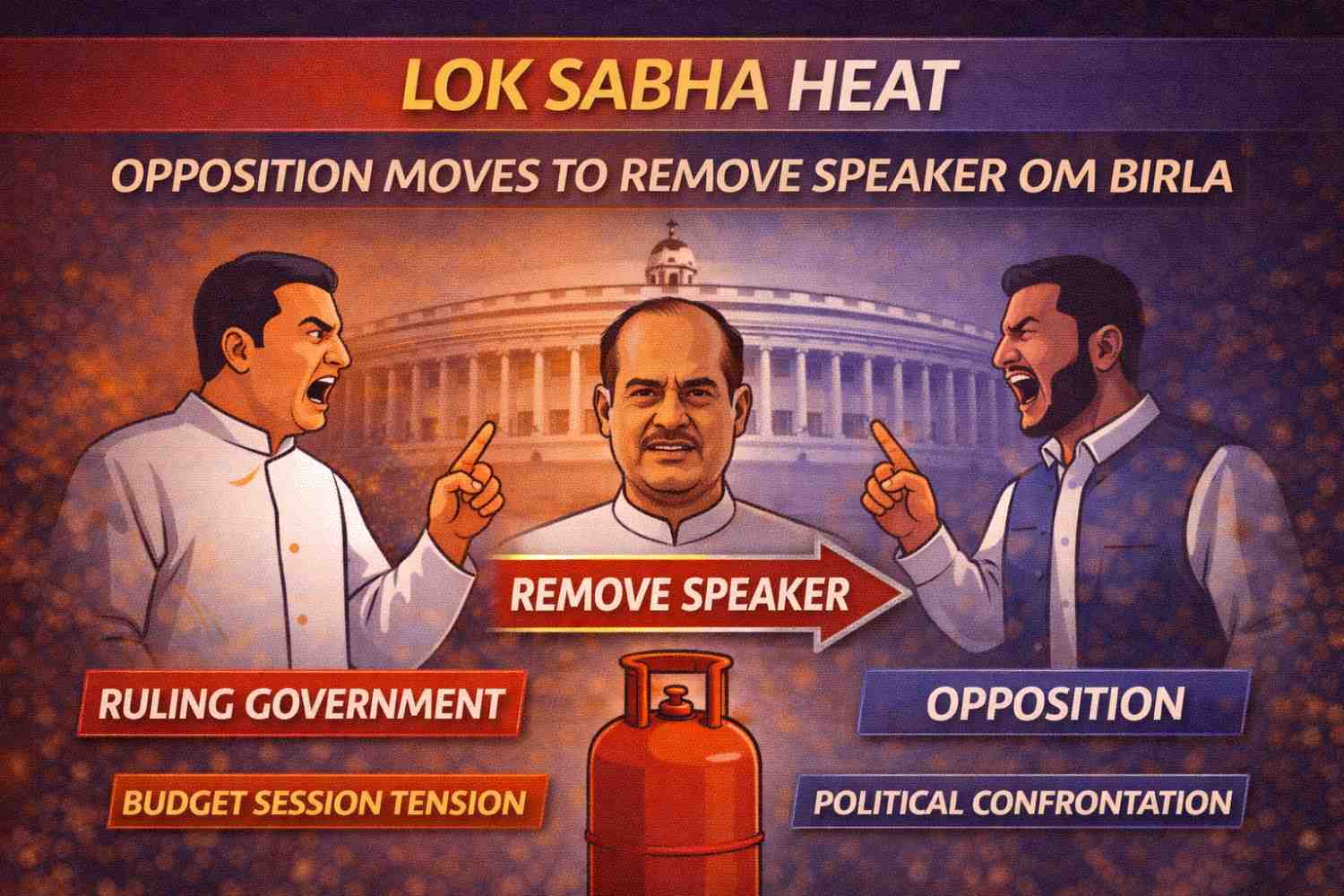
India’s Parliament witnessed intense political confrontation during the ongoing Budget Session after the Opposition moved a resolution seeking the removal of Om Birla as the Speaker of the Lok Sabha. The move triggered heated exchanges between treasury benches and Opposition leaders, forcing repeated disruptions and adjournments in the House.
The development has escalated political tensions during a crucial legislative period, with the Budget Session already under pressure from multiple policy debates and national security discussions. While such motions are constitutionally permitted, attempts to remove a sitting Speaker are rare and often carry significant political implications.
What the Opposition’s Resolution Means
Under the provisions of the Constitution of India, members of the Lok Sabha can introduce a resolution to remove the Speaker from office. Article 94 of the Constitution allows the House to pass such a motion with a majority vote.
Opposition parties argue that the resolution reflects concerns over the Speaker’s conduct and decisions in the House, particularly regarding parliamentary procedures, debate allocation, and disciplinary actions during contentious discussions.
The motion must follow a formal parliamentary process, which includes prior notice before it can be taken up for discussion and voting in the Lok Sabha.
If admitted, the House would then debate the resolution before deciding its outcome through a vote.
Why the Budget Session Turned Turbulent
The Budget Session of Parliament is traditionally one of the most important legislative periods, as it involves debates on government expenditure, financial policy, and national priorities.
However, the current session has been repeatedly disrupted by sharp political disagreements between the ruling coalition and Opposition parties. The resolution targeting Speaker Om Birla has intensified these confrontations.
During proceedings, members from both sides raised slogans and objections, leading to repeated adjournments by the Chair.
Parliamentary disruptions are not uncommon during politically sensitive debates, but a motion against the Speaker adds an additional layer of institutional tension because the office is expected to function as a neutral authority in the House.
The Role of the Lok Sabha Speaker
The Speaker of the Lok Sabha holds one of the most powerful procedural positions in India’s parliamentary system.
The Speaker presides over House proceedings, ensures adherence to parliamentary rules, and maintains order during debates. The office also plays a crucial role in deciding procedural questions, including the admission of motions and the conduct of legislative discussions.
Once elected, the Speaker is expected to operate with political neutrality despite being nominated by a political party.
The position also carries constitutional authority in matters such as interpreting parliamentary rules and managing legislative business.
Because of the importance of this role, motions seeking the removal of a Speaker are relatively rare in India’s parliamentary history.
Political Reactions Across Parties
The resolution has drawn strong reactions from both the ruling coalition and Opposition leaders.
Government representatives have criticised the move as politically motivated and disruptive to parliamentary functioning during an important legislative session. They argue that such actions could weaken parliamentary institutions by turning procedural disagreements into political confrontations.
Opposition parties, however, maintain that raising concerns about the functioning of parliamentary institutions is part of their democratic responsibility.
They say the resolution reflects broader dissatisfaction over how debates and legislative processes have been managed in the current session.
The disagreement has further widened the political divide inside Parliament, contributing to the stalemate seen in recent proceedings.
Impact on Legislative Business
Repeated disruptions in the Lok Sabha could affect the passage of key legislative proposals and financial discussions during the Budget Session.
Parliament typically considers several important bills, committee reports, and policy debates during this period. Frequent adjournments reduce the time available for these discussions and may force the government to adjust the legislative schedule.
In some cases, extended disruptions can lead to crucial bills being passed with limited debate or postponed for later sessions.
For lawmakers and observers, the standoff highlights the ongoing challenge of balancing political contestation with the need for effective legislative functioning.
Historical Context of Speaker Removal Motions
India’s parliamentary system has occasionally witnessed attempts to challenge the authority of the Speaker, but such resolutions rarely progress to the stage of removal.
Historically, Speakers have often completed their tenure unless political developments significantly shift the balance of power in the House.
Because the motion requires majority support in the Lok Sabha, its outcome depends largely on the numerical strength of political alliances in Parliament.
Even when such resolutions are introduced, they often serve as political signals rather than realistic attempts to remove the presiding officer.
Constitutional Safeguards and Procedure
The Constitution includes safeguards designed to ensure that the office of the Speaker remains stable and protected from frequent political challenges.
For example, once a notice for removal is admitted, the Speaker typically does not preside over proceedings related to that motion. Another member of the House chairs the debate to maintain procedural fairness.
The debate then allows members from all sides to present arguments before the House votes on the resolution.
These safeguards aim to maintain institutional integrity while allowing democratic scrutiny of parliamentary offices.
Broader Implications for Indian Politics
The current standoff highlights the increasingly confrontational nature of parliamentary politics in India.
In recent years, sessions of Parliament have frequently witnessed disruptions, protests, and walkouts from both ruling and Opposition members. Such tactics are often used to draw attention to political grievances or policy disagreements.
However, institutional experts often warn that prolonged disruptions can weaken parliamentary debate and reduce the effectiveness of legislative oversight.
The resolution targeting Speaker Om Birla therefore reflects not only a procedural dispute but also the broader political tensions shaping India’s parliamentary landscape.
What Happens Next in Parliament
The immediate future of the motion depends on whether the resolution is formally admitted and scheduled for discussion.
If it proceeds, lawmakers will debate the proposal before the House votes on whether the Speaker should remain in office.
Meanwhile, parliamentary leaders from both sides may attempt negotiations to reduce tensions and allow the Budget Session to continue with minimal disruptions.
For now, the confrontation has already underscored the fragile balance between political rivalry and institutional stability inside India’s Parliament.
As the Budget Session progresses, the outcome of the standoff will likely influence both legislative productivity and the broader tone of political debate in the country’s highest law-making body.
Last Updated on: Saturday, March 14, 2026 1:18 am by Indian News Bulletin Team | Published by: Indian News Bulletin Team on Tuesday, March 10, 2026 10:47 pm | News Categories: India
About The Author