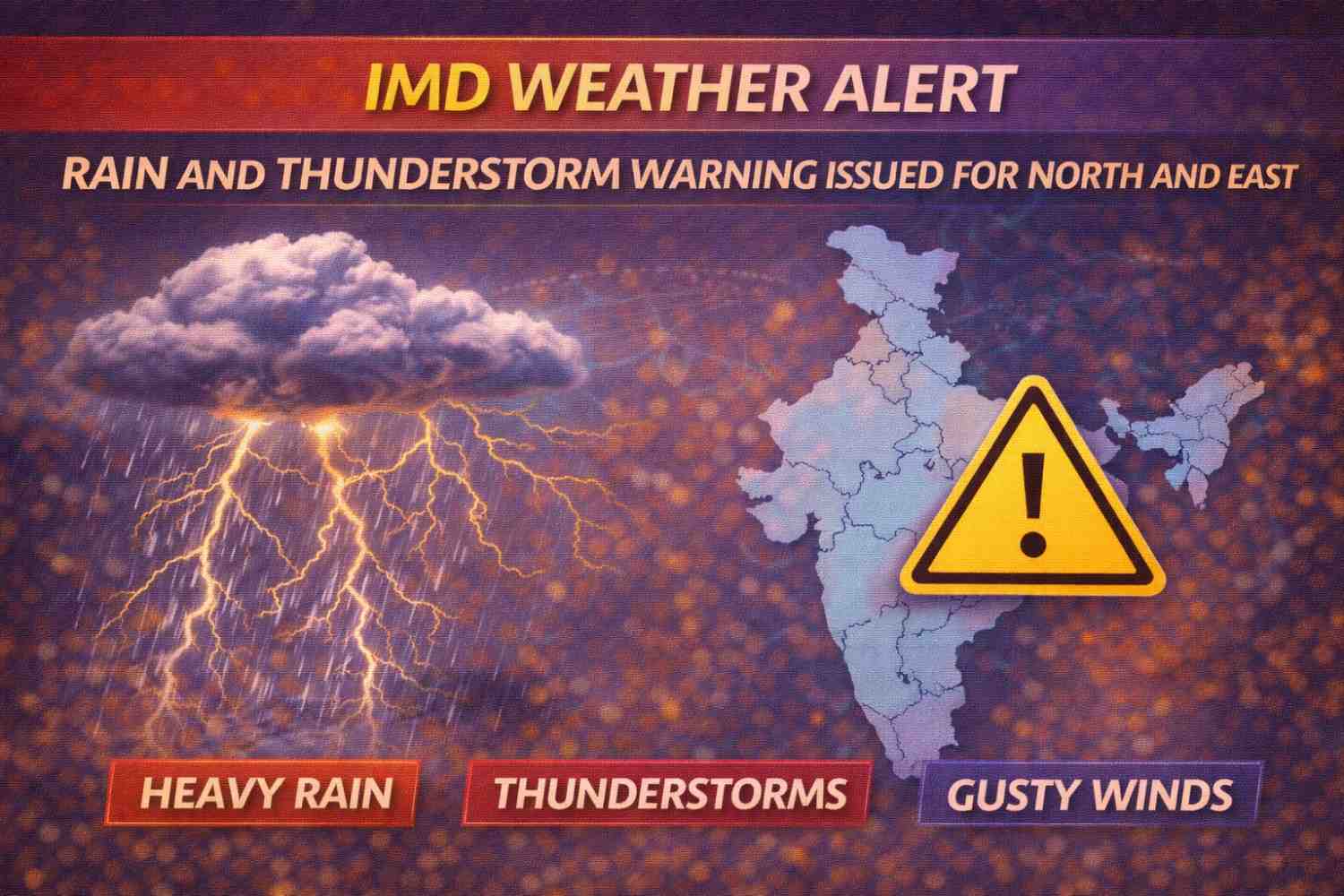
The India Meteorological Department (IMD) has issued a fresh weather alert warning of rainfall, thunderstorms, and gusty winds across several states in northern and eastern India. According to the latest forecast, parts of the country could experience unstable weather conditions over the coming days, prompting authorities to advise caution for residents, commuters, and farmers.
Weather alerts from the national forecasting agency often trigger heightened public attention, especially when they affect multiple regions simultaneously. With pre-summer weather patterns shifting across the Indian subcontinent, meteorologists say intermittent rain and thunderstorm activity may continue in several states as atmospheric conditions evolve.
The IMD’s advisory highlights the likelihood of moderate rainfall in some regions along with thunderstorms accompanied by strong winds in others. Such weather patterns can influence daily travel, agriculture activities, and urban infrastructure, making accurate forecasts essential for public preparedness.
What the Latest IMD Weather Alert Indicates
According to the India Meteorological Department, weather systems developing over northern and eastern India are expected to bring rainfall and thunderstorm activity to multiple states. Meteorologists typically issue such alerts when atmospheric instability increases due to factors such as moisture incursion, wind convergence, and temperature contrasts in the region.
Thunderstorms during the transition period between winter and summer are not uncommon in several parts of India. However, sudden changes in weather can still disrupt daily routines, particularly in densely populated urban areas and agricultural regions.
Weather alerts are categorised based on severity and potential impact. These advisories are meant to inform residents, disaster management authorities, and local administrations so that precautionary measures can be taken where necessary.
States Likely to Experience Rainfall and Thunderstorms
The forecast suggests that several states in northern and eastern India could see rainfall or thunderstorm activity over the next few days. These conditions are often associated with regional weather systems such as western disturbances or localised convection.
Areas that may experience weather changes include parts of the Indo-Gangetic plains and eastern regions where moisture-laden winds and rising temperatures can create favourable conditions for thunderstorms.
Residents in these areas may experience:
- Intermittent rainfall
- Thunderstorms accompanied by lightning
- Gusty winds in certain locations
- Temporary drops in temperature
Weather patterns can vary significantly from district to district, which is why the IMD typically advises residents to monitor local forecasts and regional updates.
Understanding Thunderstorm Formation in India
Thunderstorms are a common weather phenomenon in India, particularly during seasonal transitions. These storms occur when warm, moist air rises rapidly into cooler layers of the atmosphere, creating unstable conditions.
As the rising air condenses into clouds, it releases energy that fuels the storm system. This process can produce:
- Lightning and thunder
- Heavy but short-lived rainfall
- Sudden gusts of wind
- Temperature fluctuations
In eastern India, pre-monsoon thunderstorms—sometimes known locally by regional names—can occur during the late winter and early summer months. Northern India can also experience thunderstorms associated with weather disturbances moving across the region.
While most thunderstorms are brief, they can occasionally cause disruptions such as power outages, tree damage, or delays in transportation.
Possible Impact on Daily Life and Travel
Weather alerts issued by the India Meteorological Department are important because even moderate storms can affect routine activities.
Urban Transportation
Rainfall and strong winds may lead to slower traffic conditions in cities. Reduced visibility and wet roads often increase the risk of traffic congestion and delays.
Railway operations and flights may also experience occasional disruptions during intense thunderstorm activity, particularly if lightning or heavy rainfall affects visibility.
Agriculture and Farming
Weather forecasts are closely monitored by farmers across India. Rainfall during certain periods can benefit crops by replenishing soil moisture, but sudden storms accompanied by strong winds or hail can damage standing crops.
Agricultural communities often rely on short-term forecasts from the IMD to plan irrigation schedules, harvesting activities, and crop protection measures.
Infrastructure and Utilities
Strong winds and lightning during thunderstorms can sometimes lead to temporary disruptions in power supply or communication networks. Local authorities generally remain on alert during severe weather warnings to ensure quick response to such situations.
Why Weather Alerts Are Important for Public Safety
Weather advisories play a crucial role in disaster preparedness and public safety. By issuing alerts in advance, the India Meteorological Department helps authorities and citizens take preventive steps.
For example, advance warnings allow local administrations to:
- Prepare emergency response teams
- Monitor vulnerable areas prone to flooding or storm damage
- Issue travel advisories where required
- Coordinate with disaster management agencies
Timely weather information is especially important in a country like India, where diverse climate zones can produce a wide range of weather events within a short period.
How Climate Variability Is Affecting Weather Patterns
Experts note that weather variability has become more noticeable in recent years due to changing climatic conditions. While thunderstorms during seasonal transitions are normal, shifts in rainfall patterns and temperature trends can influence the frequency and intensity of such events.
Meteorologists continue to study long-term climate trends to better understand how regional weather systems behave and how forecasting models can be improved.
Advances in satellite technology, radar systems, and computer modelling have significantly enhanced the ability of agencies like the India Meteorological Department to track storms and issue timely alerts.
What Residents Should Do During Thunderstorm Alerts
When thunderstorms are forecast, basic safety precautions can help reduce risks associated with lightning and strong winds.
Common safety recommendations include:
- Avoid taking shelter under isolated trees during lightning
- Stay indoors during intense thunderstorm activity
- Secure loose outdoor objects that could be blown away by strong winds
- Follow updates from official weather agencies and local authorities
Drivers are also advised to exercise caution during rainfall or storm conditions, as roads may become slippery and visibility can be reduced.
Monitoring Weather Updates in Real Time
The India Meteorological Department regularly publishes weather bulletins, forecasts, and alerts through its official channels. Many state disaster management departments also share region-specific updates during severe weather events.
Citizens can stay informed through:
- Official IMD weather bulletins
- State disaster management alerts
- Television and digital news updates
- Weather apps and mobile notifications
Staying informed allows individuals and communities to respond quickly to changing weather conditions.
Weather Trends to Watch in the Coming Weeks
As India moves toward the warmer months, meteorologists expect a gradual shift in weather patterns across the country. Rising temperatures combined with atmospheric moisture can lead to periodic thunderstorms in several regions before the onset of the monsoon season later in the year.
Weather systems such as western disturbances may continue to influence northern India, while eastern states often experience pre-summer convective storms.
For residents and businesses alike, keeping track of weather forecasts remains important as seasonal transitions can bring sudden changes in conditions.
A Reminder of the Importance of Reliable Forecasting
Weather alerts like the latest advisory from the India Meteorological Department highlight the crucial role that scientific forecasting plays in public safety and daily life. Accurate predictions allow communities to prepare for potential disruptions while helping sectors such as agriculture, transportation, and energy operate more efficiently.
As India’s weather monitoring infrastructure continues to improve, early warning systems are expected to become even more precise, helping reduce the impact of sudden weather events.
For now, residents in northern and eastern parts of the country are advised to remain aware of the latest forecasts and follow official advisories as rainfall and thunderstorms move across the region.
Last Updated on: Saturday, March 14, 2026 1:36 am by Indian News Bulletin Team | Published by: Indian News Bulletin Team on Monday, March 9, 2026 12:24 pm | News Categories: India
About The Author