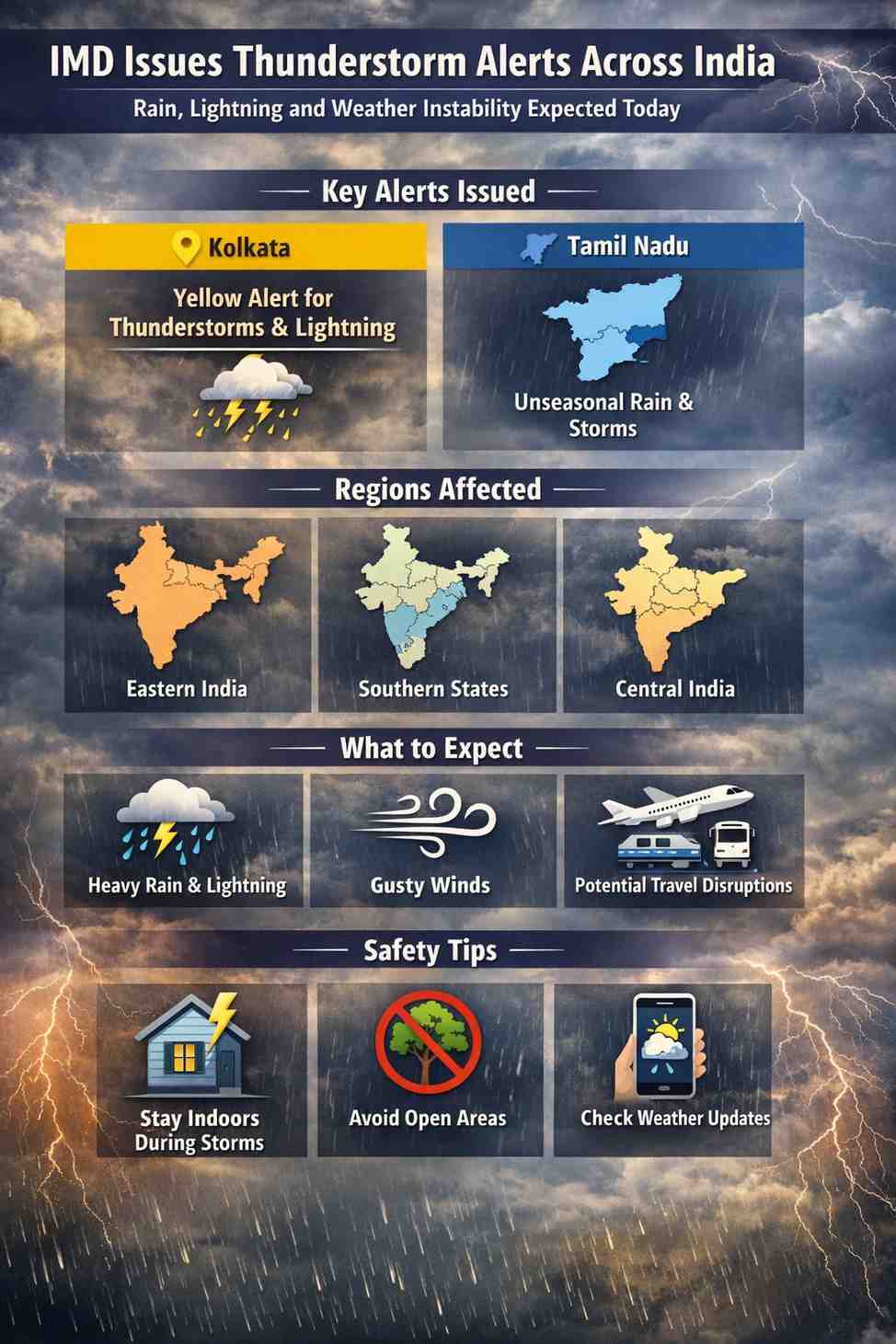
Multiple States on Alert as Weather Patterns Turn Unstable
India is witnessing a sharp shift in weather conditions, with the India Meteorological Department (IMD) issuing thunderstorm alerts across several regions. From eastern India to southern states, unseasonal rain, lightning activity and gusty winds are being reported, even as parts of the country continue to face rising temperatures.
The contrasting weather patterns—heatwave conditions in some regions and thunderstorms in others—highlight increasing atmospheric instability, which is driving a surge in online searches related to “IMD alert today,” “thunderstorm warning India,” and “rain forecast March 2026.”
Yellow Alert Issued in
Thunderstorms and Lightning Expected
The IMD has issued a yellow alert for Kolkata and surrounding districts, indicating the possibility of thunderstorms accompanied by lightning and moderate rainfall. Such alerts typically signal the need for caution, particularly for outdoor activities.
Weather conditions in the region are expected to remain humid, with intermittent cloud cover and storm activity during afternoon and evening hours.
Impact on Daily Life
- Possible traffic disruptions due to sudden rain spells
- Risk of waterlogging in low-lying areas
- Flight delays and local transport interruptions
Residents have been advised to stay updated with local forecasts and avoid open areas during lightning activity.
Rain and Thunderstorm Activity in
Southern States See Sudden Weather Shift
Parts of Tamil Nadu, including Chennai and nearby districts, are experiencing unseasonal rainfall along with thunderstorms. This comes amid otherwise warm conditions, creating a mix of heat and humidity that can intensify storm development.
The IMD has indicated that these weather conditions may persist intermittently over the next few days, driven by localised atmospheric disturbances.
What’s Causing the Sudden Rain?
Meteorologists attribute this to:
- Moisture incursion from nearby seas
- Local convection due to rising temperatures
- Wind pattern changes in the lower atmosphere
Such conditions are common during transitional seasons but appear to be more intense and widespread this year.
Why Is India Seeing Such Extreme Weather Swings?
Clash of Heat and Moisture
The current weather instability is largely due to the interaction between:
- Rising surface temperatures (early summer effect)
- Incoming moisture-laden winds
This combination creates ideal conditions for thunderstorms, especially in eastern and southern India.
Increasing Climate Variability
Experts note that while thunderstorms during this period are not unusual, the frequency and intensity of such events appear to be increasing. The coexistence of heatwaves and storm systems suggests a broader pattern of climate variability.
This aligns with recent trends where India has experienced:
- Sudden temperature spikes
- Short bursts of intense rainfall
- Unpredictable seasonal transitions
Regions Likely to Be Affected Today
According to current forecasts, the following regions may experience thunderstorms or rainfall:
- Eastern India (including West Bengal)
- Southern peninsula (including Tamil Nadu)
- Isolated pockets in central India
Weather activity may vary in intensity, with some areas witnessing brief showers while others may experience stronger thunderstorms.
Travel and Commuter Advisory
Air and Rail Travel
Thunderstorms and lightning can impact visibility and operational safety, potentially leading to:
- Flight delays or rescheduling
- Temporary disruptions in rail services
Passengers are advised to check real-time updates before travelling.
Road Conditions
Heavy showers, even if brief, can cause:
- Slippery roads
- Reduced visibility
- Localised flooding
Urban commuters should plan for potential delays during peak hours.
Safety Guidelines for Residents
During Thunderstorms
- Avoid standing under trees or near electric poles
- Stay indoors during lightning activity
- Unplug sensitive electronic devices if necessary
General Precautions
- Carry umbrellas or rain protection when stepping out
- Monitor official weather updates
- Stay hydrated, especially in humid conditions
Weather Trends to Watch in the Coming Days
Meteorologists are closely monitoring how these storm systems evolve over the next few days. Key factors include:
- Whether thunderstorms spread to additional regions
- Interaction with ongoing heatwave conditions
- Duration of rainfall activity
Early indications suggest that weather instability may continue in pockets, even as temperatures rise across northern and western India.
Conclusion
The IMD’s thunderstorm alerts across multiple states underline a growing pattern of weather unpredictability in India. With Kolkata under a yellow alert and Tamil Nadu witnessing unseasonal rain, the country is currently experiencing a mix of extreme heat and sudden storms.
For residents, staying informed and prepared is crucial as weather conditions continue to fluctuate. As climate variability becomes more pronounced, such contrasting weather events may become increasingly common, making real-time awareness and precautionary measures more important than ever.
Last Updated on: Tuesday, March 17, 2026 11:12 pm by Indian News Bulletin Team | Published by: Indian News Bulletin Team on Tuesday, March 17, 2026 12:50 pm | News Categories: India
About The Author