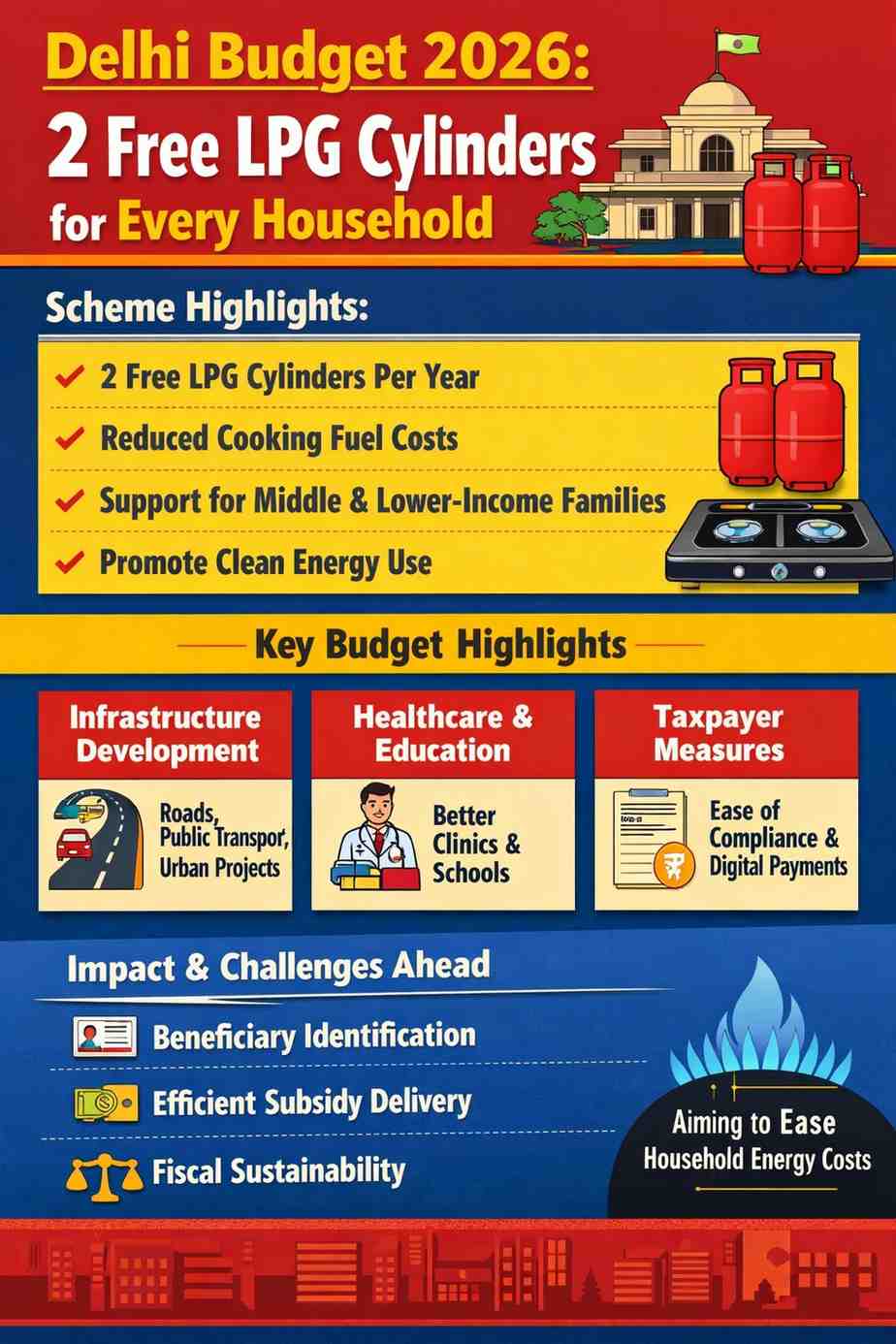
The Delhi government’s Budget Session witnessed intense debate after the announcement of a major welfare measure — two free LPG cylinders annually for eligible households — aimed at easing the burden of rising energy costs. The development has drawn widespread public attention as policymakers attempt to balance fiscal priorities with social support amid global price volatility. 🔥🏛️
The proposal was discussed in the Delhi Legislative Assembly as part of broader budgetary deliberations covering subsidies, infrastructure spending, and taxation measures affecting residents and businesses in the national capital.
Free LPG Cylinders Scheme: What Has Been Announced
According to budget proposals presented during the session, the government plans to extend support to households through subsidised or free LPG cylinder distribution. The initiative is intended to provide financial relief to families impacted by higher cooking fuel prices in recent months.
Objectives of the Scheme
Policymakers highlighted several key goals behind the announcement:
- Reduce household expenditure on essential energy needs
- Promote cleaner cooking fuel adoption
- Support vulnerable and middle-income families
- Stabilise consumption patterns during price fluctuations
Energy affordability remains a politically and economically sensitive issue, particularly in urban regions where fuel expenses form a significant part of monthly budgets.
Fiscal Impact and Budgetary Considerations
The announcement has triggered discussions among economists and opposition leaders regarding its potential fiscal implications. Subsidy-driven programmes often require careful resource allocation to ensure long-term sustainability.
Budget experts note that the government may need to optimise revenue streams or reprioritise spending to accommodate welfare commitments while maintaining infrastructure investment and public service delivery.
The final structure of the scheme — including eligibility criteria, implementation timelines, and funding mechanisms — is expected to be clarified through subsequent notifications.
Broader Budget Highlights
Beyond the LPG subsidy proposal, the Budget Session covered multiple policy areas affecting Delhi’s residents and business community.
Infrastructure and Urban Development
Discussions included allocations for road upgrades, public transport modernisation, and urban planning initiatives aimed at improving mobility and reducing congestion. Investments in digital governance platforms were also highlighted as part of efforts to enhance service delivery efficiency.
Healthcare and Education Spending
Budgetary provisions for strengthening primary healthcare facilities and expanding educational infrastructure were emphasised as core priorities. Policymakers underscored the importance of human capital development in sustaining economic growth.
Taxpayer-Focused Measures
While no major structural tax changes were immediately announced, officials indicated that efforts would continue to streamline compliance processes and expand digital payment ecosystems. Such measures are intended to improve revenue transparency and reduce administrative burdens.
Political Reactions and Assembly Debate
The announcement of free LPG cylinders led to heated exchanges in the Assembly, with opposition members questioning the timing and fiscal viability of the proposal. Supporters argued that targeted subsidies are necessary to shield citizens from external economic shocks such as global energy price surges.
Political analysts say welfare measures often become focal points during budget debates, reflecting differing ideological approaches to economic management and social protection.
Impact on Households and Energy Consumption
For many families, especially those in lower and middle-income brackets, cooking fuel costs represent a recurring financial challenge. Subsidy schemes can influence consumption behaviour by encouraging consistent use of cleaner fuels instead of traditional alternatives.
Experts note that sustained affordability initiatives may also contribute to public health improvements by reducing indoor air pollution linked to conventional cooking methods.
Implementation Challenges to Watch
The success of the scheme will depend on administrative efficiency, beneficiary identification mechanisms, and coordination with fuel distributors. Past experiences with subsidy delivery have shown that digital verification systems and direct benefit transfer frameworks can help minimise leakages.
Authorities are expected to release detailed guidelines outlining distribution processes and grievance redressal channels.
Budget Session Significance
The ongoing deliberations underscore how urban governance priorities are evolving in response to economic pressures and citizen expectations. Welfare support, infrastructure expansion, and fiscal prudence remain central themes shaping the policy landscape in Delhi.
As the Budget Session progresses, further announcements and amendments could influence the final structure of programmes affecting households, businesses, and taxpayers across the capital.
Last Updated on: Wednesday, March 25, 2026 12:12 am by Indian News Bulletin Team | Published by: Indian News Bulletin Team on Tuesday, March 24, 2026 3:11 pm | News Categories: India
About The Author