
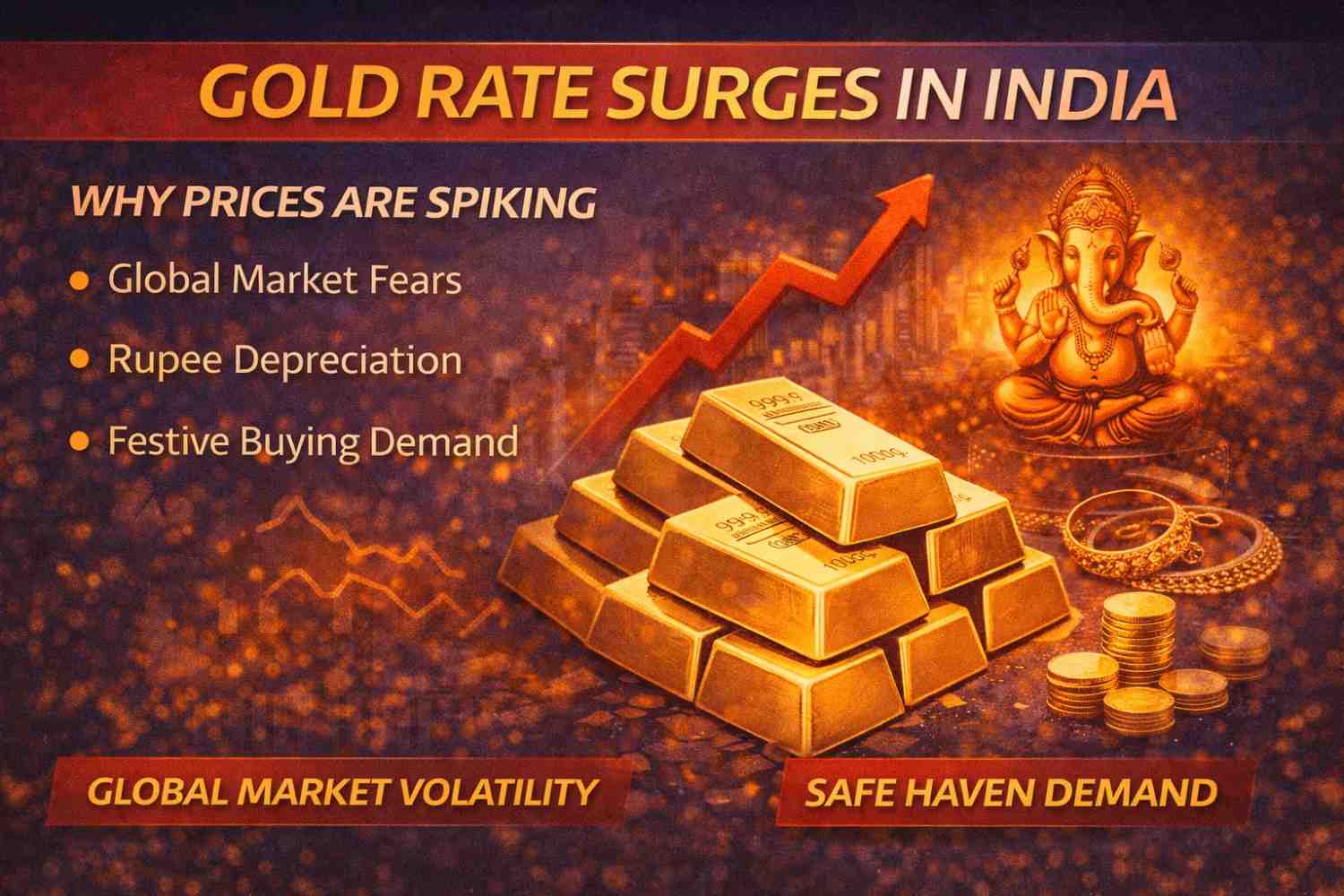
Gold prices in India have surged sharply in recent weeks, drawing the attention of investors, jewellers, and households alike. The rally in the precious metal comes amid heightened global economic uncertainty, fluctuating currencies, and strong demand for safe-haven assets.
In domestic markets, gold prices typically track international trends while also reflecting the movement of the Indian rupee and local demand. As global financial markets react to geopolitical tensions, inflation concerns, and central bank policy signals, the price of gold has become increasingly volatile.
For Indian consumers and investors searching for the “gold rate today,” the current spike raises important questions: What is driving the surge, how long could it last, and what does it mean for buyers ahead of key festive and wedding seasons?
Gold Price Trends in India
Gold remains one of the most widely tracked commodities in India due to its cultural, financial, and investment significance. Prices in India are influenced by global bullion rates as well as domestic factors such as import duties, currency fluctuations, and seasonal demand.
In recent weeks, gold prices have risen steadily across major bullion markets such as Mumbai and Delhi, reflecting the broader global trend.
Bullion traders say the surge is driven primarily by:
- Increased global demand for safe-haven assets
- Currency volatility affecting emerging markets
- Central bank buying in global markets
- Investor concerns about inflation and economic growth
Together, these factors have pushed international gold prices higher, which in turn affects domestic rates.
Global Market Volatility Driving Gold Demand
One of the biggest reasons behind the spike in gold prices is uncertainty in global financial markets. When economic or geopolitical risks rise, investors often shift money into gold because it is considered a relatively stable store of value.
Several developments have contributed to this trend:
Economic Uncertainty
Global markets are closely monitoring growth prospects in major economies such as the United States, China, and the European Union. Concerns about slowing growth or recession risks often push investors toward defensive assets like gold.
Gold historically performs well during periods of economic instability because it is not tied to the performance of a specific company or government.
Geopolitical Tensions
Geopolitical conflicts and diplomatic tensions can also increase demand for gold. When global stability appears uncertain, investors often move funds away from riskier assets like equities and toward commodities perceived as safe.
Such shifts can trigger rapid price increases in the gold market.
Central Bank Purchases
Central banks around the world have been steadily increasing their gold reserves in recent years. This trend reflects a strategy to diversify foreign exchange reserves and reduce dependence on specific currencies.
Large purchases by central banks can tighten supply in the market, supporting higher prices.
Role of the Indian Rupee in Gold Prices
While international gold prices are quoted in US dollars, the Indian rupee exchange rate also plays a crucial role in determining domestic gold prices.
When the rupee weakens against the US dollar, imported gold becomes more expensive for Indian buyers. Since India imports a large portion of its gold requirements, currency depreciation often pushes domestic prices higher.
Even if global prices remain stable, fluctuations in the rupee can cause noticeable changes in the gold rate today across Indian markets.
Festive Demand and Seasonal Buying
India’s cultural traditions make gold a highly sought-after commodity during festivals and weddings. Demand typically increases during events such as:
- Wedding seasons
- Major festivals like Diwali
- Auspicious buying days like Akshaya Tritiya
During these periods, jewellery retailers and bullion dealers often see a surge in purchases from households.
Strong seasonal demand can contribute to price increases, particularly if global prices are already trending upward.
Investment Demand: Gold as a Safe Haven
Gold has long been viewed as a safe-haven investment, meaning investors tend to buy it during times of market stress.
In recent years, Indian investors have expanded their gold investments beyond jewellery to include financial instruments such as:
- Gold exchange-traded funds (ETFs)
- Sovereign gold bonds
- Digital gold platforms
These options allow investors to gain exposure to gold prices without physically purchasing the metal.
When market uncertainty increases, demand for these investment products often rises, contributing to higher gold prices.
Impact on Indian Consumers
The surge in gold prices has mixed implications for Indian consumers.
Higher Jewellery Costs
For households planning weddings or festive purchases, rising gold prices mean higher costs for jewellery. Since gold jewellery remains an important part of traditional ceremonies, price increases can significantly affect budgets.
Jewellers often report that buyers adjust their purchasing behaviour during price spikes by:
- Buying lighter jewellery pieces
- Opting for lower purity options
- Delaying purchases in anticipation of price corrections
Opportunity for Investors
On the other hand, investors who already hold gold may benefit from the price rise. Gold often serves as a hedge against inflation and currency depreciation.
Financial planners typically recommend maintaining a diversified portfolio, with gold forming a small but strategic component.
Influence of Global Interest Rates
Interest rates in major economies also play a significant role in shaping gold prices.
When central banks raise interest rates, assets such as bonds and fixed-income investments often become more attractive compared with gold, which does not generate interest.
However, if investors expect rate cuts or economic slowdown, gold prices may rise as demand for safer assets increases.
Market participants closely watch signals from central banks, particularly the policy decisions of the Federal Reserve, which can influence global financial markets.
Supply Factors in the Gold Market
While demand plays a major role in gold price movements, supply dynamics also influence the market.
Gold supply comes from several sources:
- Mining production
- Recycling of old jewellery and scrap gold
- Central bank sales or purchases
Changes in mining output or shifts in recycling activity can affect market availability, though demand trends often have a stronger short-term impact on prices.
What Analysts Are Watching Next
Market analysts say several factors will determine whether the current gold rally continues or stabilizes.
Key indicators include:
- Global inflation trends
- Central bank policy decisions
- Currency movements, especially the US dollar
- Geopolitical developments
- Seasonal demand in major markets like India and China
If global uncertainty persists, gold prices could remain elevated. However, improvements in economic stability or stronger financial markets may reduce demand for safe-haven assets.
Why “Gold Rate Today” Remains a Top Search in India
Search interest in gold rate today remains consistently high in India because the metal plays multiple roles in household finances.
For many families, gold is:
- A traditional store of wealth
- A form of financial security
- An important cultural asset
Because prices can change daily, consumers frequently track updates before making purchases or investment decisions.
Digital platforms and financial news websites have made real-time gold price tracking more accessible than ever, contributing to the keyword’s high search volume.
Conclusion
The current surge in gold prices in India reflects a combination of global economic uncertainty, currency fluctuations, and strong investor demand for safe-haven assets.
While rising prices may create challenges for jewellery buyers, they also highlight gold’s enduring role as a financial hedge during volatile periods.
For Indian investors and consumers monitoring the gold rate today, the coming months will depend largely on global market developments, interest rate decisions, and geopolitical stability.
As financial markets continue to navigate uncertainty, gold is likely to remain at the center of investor attention—both in India and around the world.
About the Author