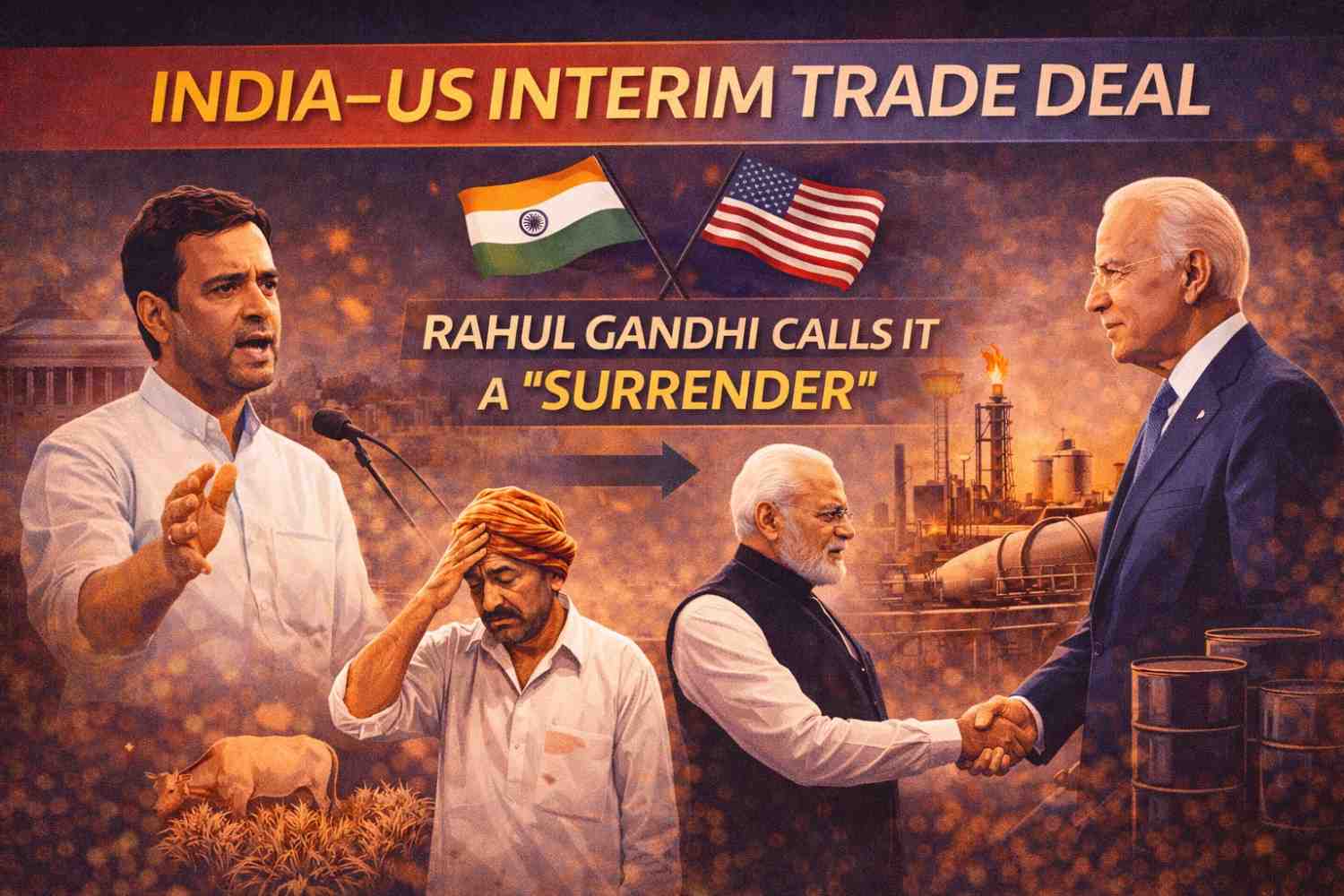
India’s proposed interim trade arrangement with the United States has triggered a sharp political debate in Parliament, with opposition leaders questioning the implications for farmers, domestic industries, and India’s long-term economic sovereignty. During a recent discussion in the Lok Sabha, Congress leader Rahul Gandhi described the proposed India–US interim trade deal as a “surrender,” accusing the government of conceding too much to Washington without adequate protection for Indian interests.
The remarks have intensified scrutiny of the negotiations between the governments of Narendra Modi and Joe Biden, especially at a time when both countries are seeking to deepen strategic and economic ties. Supporters of the talks say the agreement could unlock market access and strengthen supply chains, while critics warn it could expose vulnerable sectors such as agriculture and energy imports.
This article examines what the proposed interim trade deal entails, why it has become politically contentious, and how it could affect India’s farmers, energy security, and broader economic strategy.
What Is the India–US Interim Trade Deal?
India and the United States have been negotiating trade arrangements for several years as part of broader efforts to expand economic cooperation. While discussions about a comprehensive free trade agreement have progressed slowly, policymakers have explored the possibility of an interim or “mini” trade deal covering specific sectors.
Such an arrangement typically focuses on limited but strategically important areas such as:
- Market access for agricultural products
- Tariff adjustments on selected goods
- Digital trade and services
- Energy cooperation and imports
- Industrial supply chains
For India, the objective has been to expand exports—especially pharmaceuticals, textiles, and IT services—while also securing stable access to energy resources and advanced technologies.
For the United States, the negotiations aim to improve market access for American agricultural products, medical devices, and industrial goods in the Indian market.
Because these negotiations involve politically sensitive sectors in both countries, the talks have moved cautiously, with both governments seeking a balance between domestic economic interests and strategic partnership goals.
Rahul Gandhi’s Criticism in Lok Sabha
During parliamentary discussions, Rahul Gandhi criticized the direction of the negotiations, arguing that the proposed terms risk undermining India’s domestic economic priorities. His use of the word “surrender” in the Lok Sabha drew significant attention across political circles and media coverage.
According to opposition leaders, their concerns include:
1. Impact on Farmers
Opposition parties argue that greater access for American agricultural products could place additional pressure on Indian farmers. The United States is a major exporter of agricultural commodities such as dairy products, almonds, apples, and certain grains.
Critics fear that lower tariffs on US agricultural imports could affect local producers who already face challenges related to costs, climate risks, and market fluctuations.
2. Strategic Economic Autonomy
Another argument raised by the opposition is that trade concessions should not compromise India’s economic independence or bargaining power in future negotiations.
Opposition lawmakers say trade agreements must ensure balanced reciprocity, meaning both countries gain comparable benefits rather than one side conceding disproportionately.
3. Transparency in Negotiations
Some opposition leaders have called for greater transparency regarding the details of the negotiations, arguing that Parliament should have a clearer understanding of what sectors may be affected before any agreement is finalized.
The government has maintained that trade negotiations are ongoing and that any final deal would be designed to protect national interests.
Government’s Position on the Trade Talks
The government of Prime Minister Narendra Modi has consistently framed closer trade ties with the United States as part of a broader economic strategy. India and the US have strengthened cooperation in areas such as technology, defence, and supply chains in recent years.
Officials supporting the negotiations argue that the proposed deal could deliver several benefits:
Expanding Export Opportunities
Greater market access to the United States could benefit Indian sectors including:
- Pharmaceuticals
- Information technology services
- Engineering goods
- Textiles and garments
The US remains one of India’s largest export markets, making improved trade terms potentially valuable for Indian businesses.
Supply Chain Resilience
Both countries have emphasized building more resilient global supply chains, especially after disruptions experienced during the COVID-19 pandemic and geopolitical tensions.
Closer trade integration could help India attract investment and diversify manufacturing.
Strategic Partnership
India–US economic cooperation is often seen as part of a broader strategic relationship that includes security and technology collaboration. Strengthening economic ties can reinforce this partnership.
Why Energy Security Is a Key Factor
Energy trade is another dimension of the India–US relationship that often intersects with economic negotiations.
India has become an increasingly important importer of US crude oil and liquefied natural gas (LNG). Diversifying energy sources has been a priority for India as it seeks to reduce vulnerability to geopolitical disruptions in global energy markets.
An interim trade deal could potentially encourage:
- Long-term energy supply agreements
- Investment in energy infrastructure
- Technology cooperation in clean energy
However, critics argue that excessive dependence on any single supplier could create strategic risks, making diversification equally important.
Implications for Indian Farmers
Agriculture remains one of the most politically sensitive sectors in India’s trade policy. Millions of livelihoods depend on farming, and even small changes in import policies can have large economic and political effects.
If agricultural imports from the United States expand under a trade arrangement, the effects could vary by sector.
Possible Competitive Pressures
Certain agricultural imports could compete with domestic producers. Farmers’ groups have historically opposed trade concessions that they believe might lead to price pressure.
Opportunities for Export Growth
At the same time, some agricultural products from India could benefit from improved access to the US market, particularly specialty foods, spices, and processed agricultural goods.
Policy Safeguards
Trade negotiations often include safeguards such as quotas, phased tariff reductions, or standards compliance requirements designed to protect domestic sectors during transition periods.
The exact structure of these provisions would determine how significant the impact on farmers might be.
India–US Trade Relationship in Context
The trade relationship between India and the United States has grown significantly over the past two decades.
Key characteristics include:
- The United States is among India’s largest trading partners.
- Bilateral trade includes goods and services across technology, pharmaceuticals, agriculture, and manufacturing sectors.
- Both countries continue to discuss ways to reduce trade barriers while addressing regulatory differences.
However, trade tensions have also emerged at times, including disagreements over tariffs, market access, and digital trade policies.
Because of these complexities, negotiations have often progressed gradually rather than through sweeping free trade agreements.
Political Impact of the Debate
The debate around the interim trade deal reflects broader political dynamics in India.
Opposition parties frequently scrutinize trade agreements to ensure they do not harm domestic industries or farmers. Meanwhile, governments must balance domestic economic concerns with international economic diplomacy.
Parliamentary debates also shape public perception of economic policy, especially when issues like food security, employment, and national sovereignty are involved.
As a result, even preliminary trade discussions can become politically significant.
What Happens Next?
Negotiations between India and the United States are expected to continue as policymakers explore options for strengthening economic cooperation.
Several outcomes remain possible:
- A limited interim agreement covering selected sectors
- Continued negotiations toward a broader trade framework
- Incremental sector-specific deals without a single overarching agreement
The final shape of any arrangement will likely depend on how both sides address sensitive areas such as agriculture, market access, and regulatory standards.
Parliamentary scrutiny and public debate will also influence the process, particularly in sectors affecting farmers and small businesses.
Conclusion
The controversy surrounding the proposed India–US interim trade deal illustrates the delicate balance between economic diplomacy and domestic economic priorities.
Rahul Gandhi’s criticism in the Lok Sabha has amplified concerns about potential risks to farmers and strategic autonomy, while the government argues that closer economic ties with the United States could boost exports, strengthen supply chains, and enhance India’s global economic position.
As negotiations continue, the outcome will depend on whether policymakers can craft an agreement that advances bilateral cooperation while safeguarding India’s key economic sectors.
For millions of Indian farmers, businesses, and consumers, the stakes remain significant—and the debate over the future of India’s trade policy is likely to continue in Parliament and beyond.
About the Author