
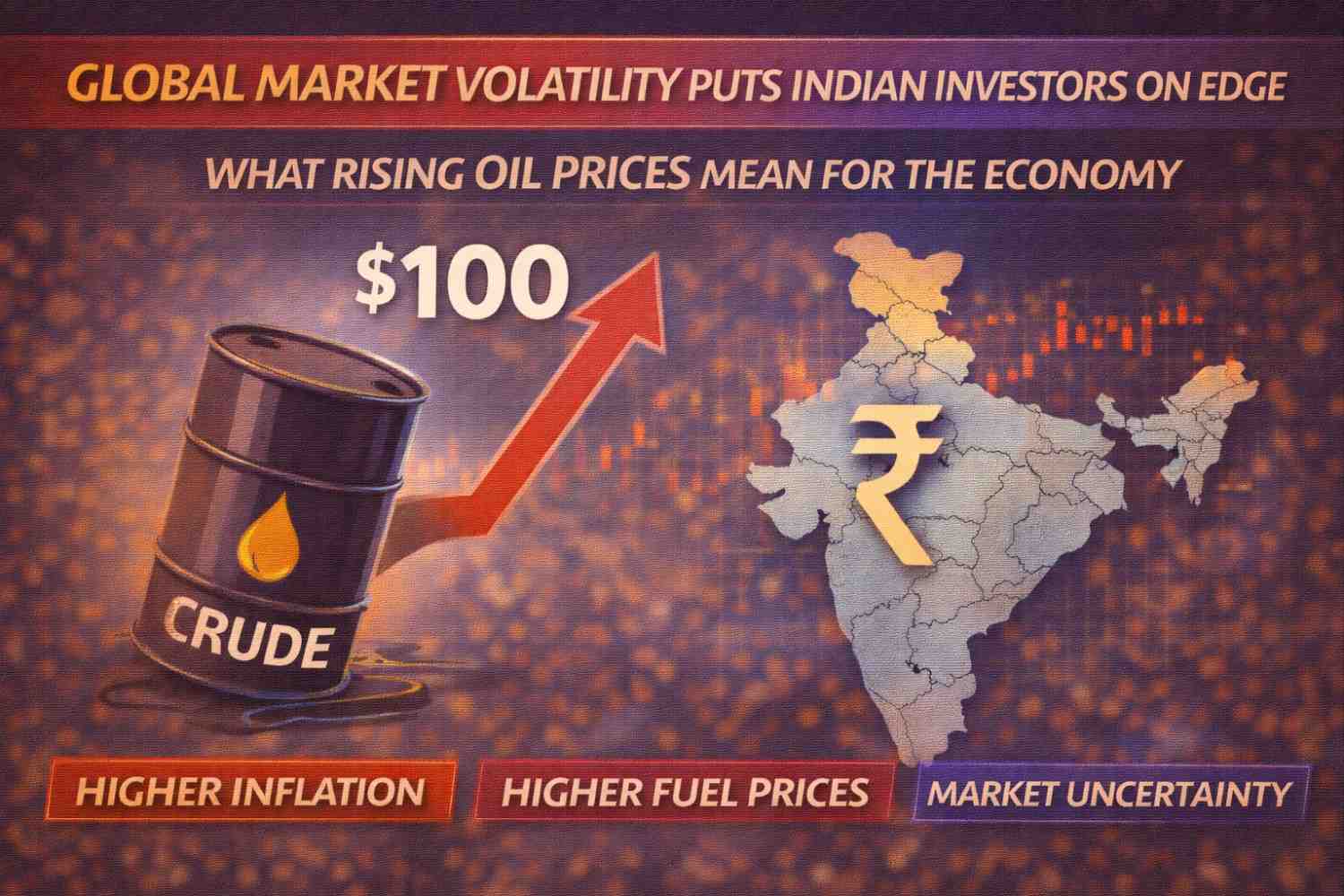
Global financial markets have entered a period of heightened uncertainty, with fluctuating commodity prices and geopolitical developments influencing investor sentiment worldwide. Among the most closely watched indicators is crude oil, whose price movements often have a direct impact on economic stability and financial markets.
For India, one of the world’s largest energy importers, rising oil prices carry significant implications for inflation, fiscal planning, and the broader economy. Analysts say that volatility in global oil markets has prompted investors and policymakers alike to closely monitor trends that could influence domestic growth and market performance.
As energy prices continue to shift, the ripple effects are being felt across sectors ranging from transportation and manufacturing to financial markets and household spending.
Why Global Market Volatility Matters for India
Global markets have become deeply interconnected, meaning fluctuations in commodities, currencies, and financial assets in one region can quickly influence economic conditions elsewhere.
India’s economic outlook is particularly sensitive to global oil prices because the country imports a substantial portion of its energy requirements. Changes in crude oil costs can influence everything from fuel prices to inflation levels and trade balances.
International benchmarks such as Brent Crude Oil and West Texas Intermediate serve as reference points for global oil pricing. When these benchmarks experience significant price swings, markets across the world—including India—often react quickly.
For investors, such volatility can create both risks and opportunities depending on how industries and financial assets respond to energy price changes.
How Rising Oil Prices Affect the Indian Economy
Oil is a critical input across multiple sectors of the economy. When prices rise in global markets, the effects can cascade through several layers of economic activity.
Impact on Inflation
One of the most immediate consequences of rising oil prices is the potential increase in inflation. Fuel costs influence transportation, logistics, and production expenses, which can lead to higher prices for goods and services.
Higher transportation costs, for instance, may raise the price of essential commodities such as food and consumer goods, affecting household budgets.
Inflation trends are closely monitored by policymakers at the Reserve Bank of India, which adjusts monetary policy tools to maintain price stability while supporting economic growth.
Pressure on India’s Import Bill
Because India imports a large share of its crude oil needs, rising global prices can significantly increase the country’s import expenditure. A higher import bill may affect the trade deficit, which measures the gap between imports and exports.
When oil becomes more expensive globally, India must spend more foreign currency on energy imports, which can influence the country’s current account balance.
Maintaining a stable external balance is an important consideration for policymakers and financial markets.
Effect on Fuel Prices and Consumer Spending
Changes in crude oil prices often influence domestic fuel prices, although the impact may vary depending on tax policies and pricing mechanisms.
Higher fuel costs can reduce consumer purchasing power, particularly for households that rely heavily on transportation for daily activities. Increased fuel expenses can also affect logistics companies, airlines, and public transport systems.
In turn, reduced consumer spending in some sectors can influence broader economic activity.
Impact on Indian Stock Markets
Oil price volatility can influence stock market movements as investors adjust their expectations for corporate earnings and economic growth.
India’s benchmark stock indices—such as BSE Sensex and Nifty 50—often react to major global developments, including shifts in commodity prices and geopolitical events.
Certain sectors tend to be more sensitive to oil price changes than others.
Sectors That May Face Pressure
Industries that rely heavily on fuel or petroleum-based products may experience higher operational costs when oil prices rise. These sectors include:
- Aviation
- Logistics and transportation
- Chemicals and petrochemicals
- Manufacturing
Companies in these sectors may face margin pressures if higher input costs cannot be fully passed on to consumers.
Sectors That May Benefit
On the other hand, energy companies involved in oil exploration, refining, and production may benefit from higher crude prices under certain market conditions.
Investors often monitor energy sector stocks closely during periods of rising oil prices.
Global Factors Driving Oil Price Volatility
Several global developments can influence crude oil prices and create volatility in financial markets.
Geopolitical Tensions
Political tensions in key oil-producing regions can disrupt supply expectations, leading to price fluctuations in global markets.
Production Decisions by Oil Producers
Major oil-producing nations periodically adjust production levels based on market conditions. Supply changes from large producers can influence global oil availability and pricing trends.
Demand Fluctuations
Economic growth trends in large economies can also influence oil demand. When global economic activity expands, demand for energy typically increases, pushing prices higher.
Conversely, economic slowdowns may reduce demand and lead to lower oil prices.
Currency Movements and the Rupee
Oil price movements often intersect with currency trends. Because crude oil is traded globally in US dollars, changes in exchange rates can affect how much importing countries pay for energy.
If the Indian rupee weakens against the US dollar while oil prices rise, the cost of imports may increase further.
Currency stability therefore plays an important role in managing the economic impact of global commodity price fluctuations.
Policy Measures to Manage Oil Price Impact
Governments and financial regulators typically employ a range of policy tools to manage the economic effects of rising oil prices.
Possible measures include:
- Adjusting fuel taxes or duties
- Managing strategic petroleum reserves
- Monitoring inflation and adjusting monetary policy
- Encouraging energy diversification
India has also been expanding its renewable energy capacity as part of long-term efforts to reduce dependence on fossil fuel imports.
Investment in solar, wind, and other renewable energy sources is seen as a strategy to strengthen energy security and reduce exposure to global oil market volatility.
Investor Strategies During Market Volatility
Periods of global market volatility often prompt investors to reassess their portfolios and risk exposure.
Financial advisors typically recommend focusing on diversified investments during uncertain market conditions. Monitoring macroeconomic indicators such as inflation, interest rates, and commodity prices can also help investors understand broader market trends.
Long-term investors often pay close attention to structural economic developments rather than short-term price fluctuations.
The Broader Economic Outlook
Despite periodic volatility in global markets, India’s economy continues to demonstrate resilience supported by domestic consumption, infrastructure investment, and digital transformation.
However, energy prices remain a key variable influencing inflation, fiscal balances, and investor sentiment.
As global oil markets continue to fluctuate, policymakers, businesses, and investors are likely to remain vigilant in tracking developments that could shape economic conditions in the months ahead.
Why Oil Prices Remain a Key Economic Indicator
Crude oil has long been one of the most influential commodities in the global economy. For a rapidly growing nation like India, its price movements can affect everything from inflation and fiscal policy to transportation costs and industrial production.
Periods of volatility in global markets therefore attract significant attention from investors, policymakers, and businesses alike.
As energy markets evolve and global economic conditions shift, the relationship between oil prices and economic stability will continue to play a central role in shaping financial trends and investment decisions in India.
About the Author