India is confronting an emerging energy supply disruption after the government invoked the Essential Commodities Act, 1955 to regulate the distribution of petroleum products and natural gas amid a worsening LPG shortage. The move comes as escalating tensions in West Asia—particularly the Iran-Israel conflict—disrupt global energy supply chains and create ripple effects in India’s fuel market.
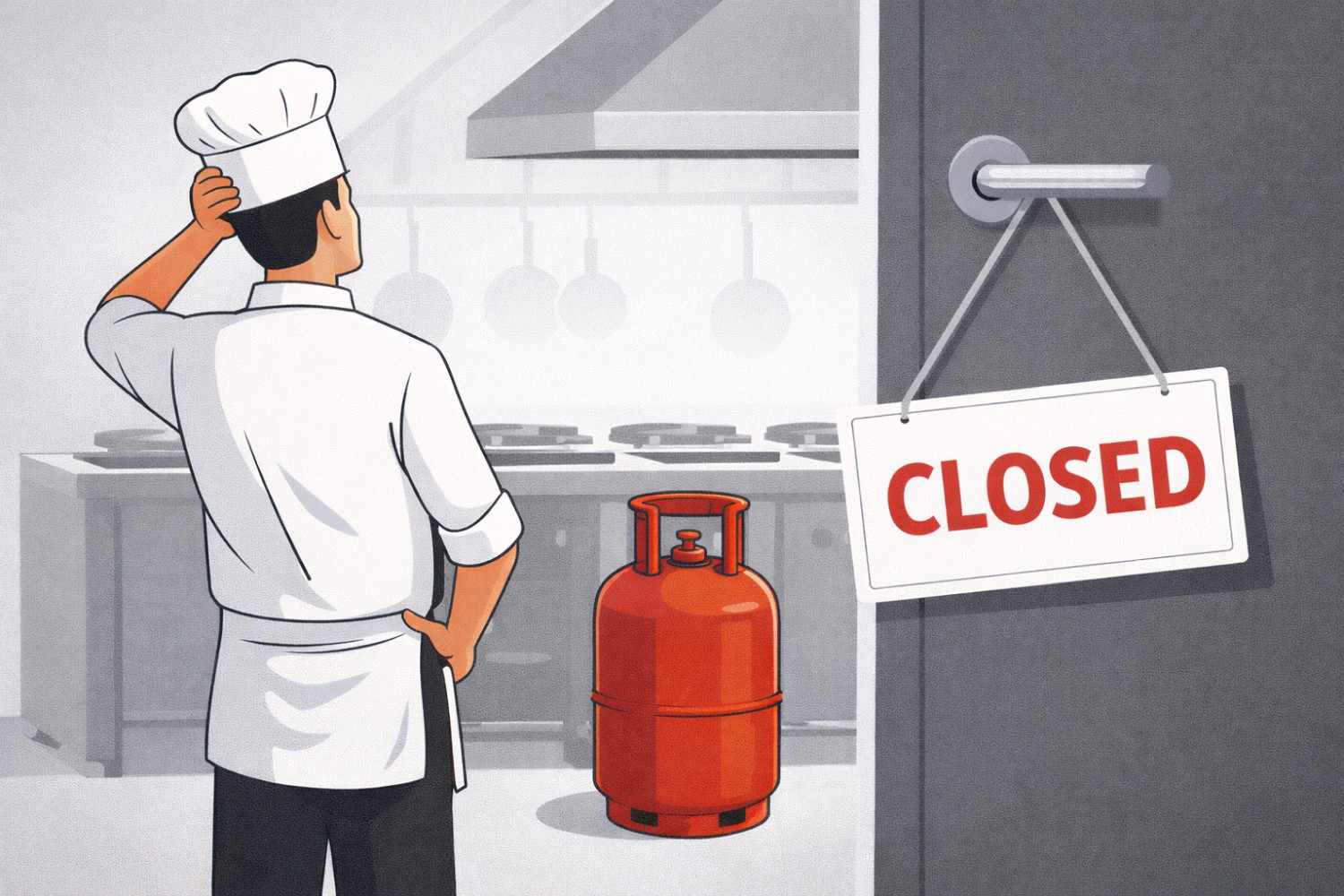
The immediate impact is being felt by the hospitality sector in major cities such as Bengaluru and Mumbai, where restaurants and hotels dependent on commercial LPG cylinders are warning of operational disruptions and potential shutdowns. Authorities have prioritised the supply of cooking gas for household use, leaving commercial consumers facing tightening supplies.
Why India Invoked the Essential Commodities Act
The central government’s decision to invoke the Essential Commodities Act is intended to ensure that critical fuels remain available during the ongoing geopolitical crisis.
Under this law, the government gains powers to regulate the production, distribution, and supply of essential goods in order to prevent hoarding, price manipulation, and shortages. In the current situation, the order allows authorities to control the allocation of LPG and natural gas across sectors.
Officials have also issued the Natural Gas (Supply Regulation) Order, 2026, which enables the government to determine which sectors receive priority allocation during supply disruptions. (Upstox – Online Stock and Share Trading)
The immediate focus is safeguarding the supply of cooking gas for households across India, which accounts for the majority of the country’s LPG consumption.
The Global Conflict Behind the Supply Shock
The LPG shortage in India is closely linked to geopolitical tensions in West Asia. The ongoing war involving Iran has disrupted shipping routes and energy exports from the Gulf region, which is a crucial source of LPG imports for India.
A major concern is the Strait of Hormuz, one of the world’s most important maritime energy corridors. A significant portion of India’s LPG imports passes through this route.
India imports a large share of its LPG requirements, and disruptions in Gulf shipments can quickly strain domestic supply chains. (Onmanorama)
As shipments slow or face logistical uncertainty, the government has moved to prioritise domestic demand while directing oil refineries to increase LPG production to stabilise supply.
Hospitality Sector Faces Immediate Impact
While domestic consumers are largely protected for now, the commercial sector is already feeling the pressure.
Hotel and restaurant associations in several cities have reported difficulties obtaining commercial LPG cylinders used in large kitchens. In Bengaluru, industry groups warned that hotels could be forced to shut down if supplies are not restored quickly.
Many restaurants depend almost entirely on commercial LPG cylinders for daily operations, making them highly vulnerable to supply disruptions. (www.ndtv.com)
In Mumbai and surrounding areas, dealers have reported interruptions in commercial cylinder supply, creating operational uncertainty for eateries, street food vendors, and catering businesses. (The Times of India)
The hospitality industry warns that prolonged disruptions could trigger widespread closures and job losses across the sector.
Why Restaurants Are Struggling More Than Households
The LPG supply chain is structured to prioritise domestic consumers, especially during crises. Household cooking gas forms the bulk of India’s LPG consumption, making it politically and socially sensitive.
As a result, the government has redirected supplies toward residential demand, leaving less fuel available for commercial use.
In addition, oil marketing companies have reportedly limited commercial cylinder distribution to essential institutions such as hospitals and educational facilities during the crisis. (Moneycontrol)
Restaurants, hotels, and catering businesses therefore find themselves at the bottom of the allocation priority list.
Menu Changes and Emergency Measures by Restaurants
Facing fuel shortages, industry bodies have begun advising restaurants to adopt emergency conservation measures.
The National Restaurant Association of India has urged members to reduce gas consumption by simplifying menus and focusing on dishes that require less cooking time or fewer burners. (Business Standard)
Some restaurants are also exploring temporary alternatives such as:
- Electric induction cooktops
- Electric fryers and ovens
- Convection cooking equipment
- Electric steamers and rice cookers
These measures may help reduce LPG dependency in the short term, although many kitchens are not fully equipped for large-scale electric cooking.
Government Measures to Stabilise Supply
The government has initiated multiple steps to address the supply disruption and prevent panic in the market.
Key measures include:
1. Increasing domestic LPG production
Refineries have been instructed to maximise LPG output and redirect production toward household consumption.
2. Monitoring distribution channels
Authorities are using the Essential Commodities Act to monitor supply chains and prevent hoarding or black-market activity.
3. Extending booking intervals
The government has increased the gap between domestic LPG refill bookings to 25 days to discourage excessive purchases and ensure equitable distribution. (Onmanorama)
4. Forming industry consultation panels
Officials have formed committees to assess supply conditions and respond to industry concerns.
These measures are designed to stabilise the situation until global supply chains recover.
Impact on Consumers and Food Prices
While households currently remain protected from immediate shortages, the LPG disruption could still affect consumers indirectly.
If restaurants face prolonged fuel shortages, several consequences may emerge:
- Temporary closures of eateries and small food outlets
- Rising food prices as businesses absorb higher fuel costs
- Reduced menu options in restaurants
- Supply disruptions in the food delivery sector
In cities where a large number of workers rely on affordable eateries for daily meals, such disruptions could have broader social and economic implications.
India’s Energy Dependence and Supply Vulnerability
The current crisis highlights India’s heavy reliance on imported energy.
India is one of the world’s largest LPG consumers and importers. A substantial share of its LPG supply originates from Middle Eastern producers, making the country vulnerable to geopolitical disruptions in the region.
Energy experts have long warned that events affecting the Gulf region can quickly translate into domestic fuel volatility in India.
The present shortage illustrates how geopolitical conflicts thousands of kilometres away can have immediate consequences for India’s domestic economy.
What Happens Next
Energy analysts believe the duration of the LPG shortage will largely depend on developments in the Middle East and the stability of global shipping routes.
If disruptions in the Strait of Hormuz persist, India may need to secure alternative LPG imports from other regions, although such adjustments could take time.
In the meantime, authorities are expected to continue regulating supply under the Essential Commodities Act while closely monitoring fuel availability across sectors.
For India’s hospitality industry, the coming weeks will be critical. Without restored commercial LPG supply, many businesses—especially small and mid-sized restaurants—may struggle to sustain operations.
The unfolding situation underscores how global geopolitical tensions are increasingly shaping domestic economic realities, with India’s kitchens and restaurants now becoming the latest frontline in a widening energy crisis.
Last Updated on: Saturday, March 14, 2026 1:16 am by Indian News Bulletin Team | Published by: Indian News Bulletin Team on Tuesday, March 10, 2026 10:45 pm | News Categories: India
About The Author