Introduction
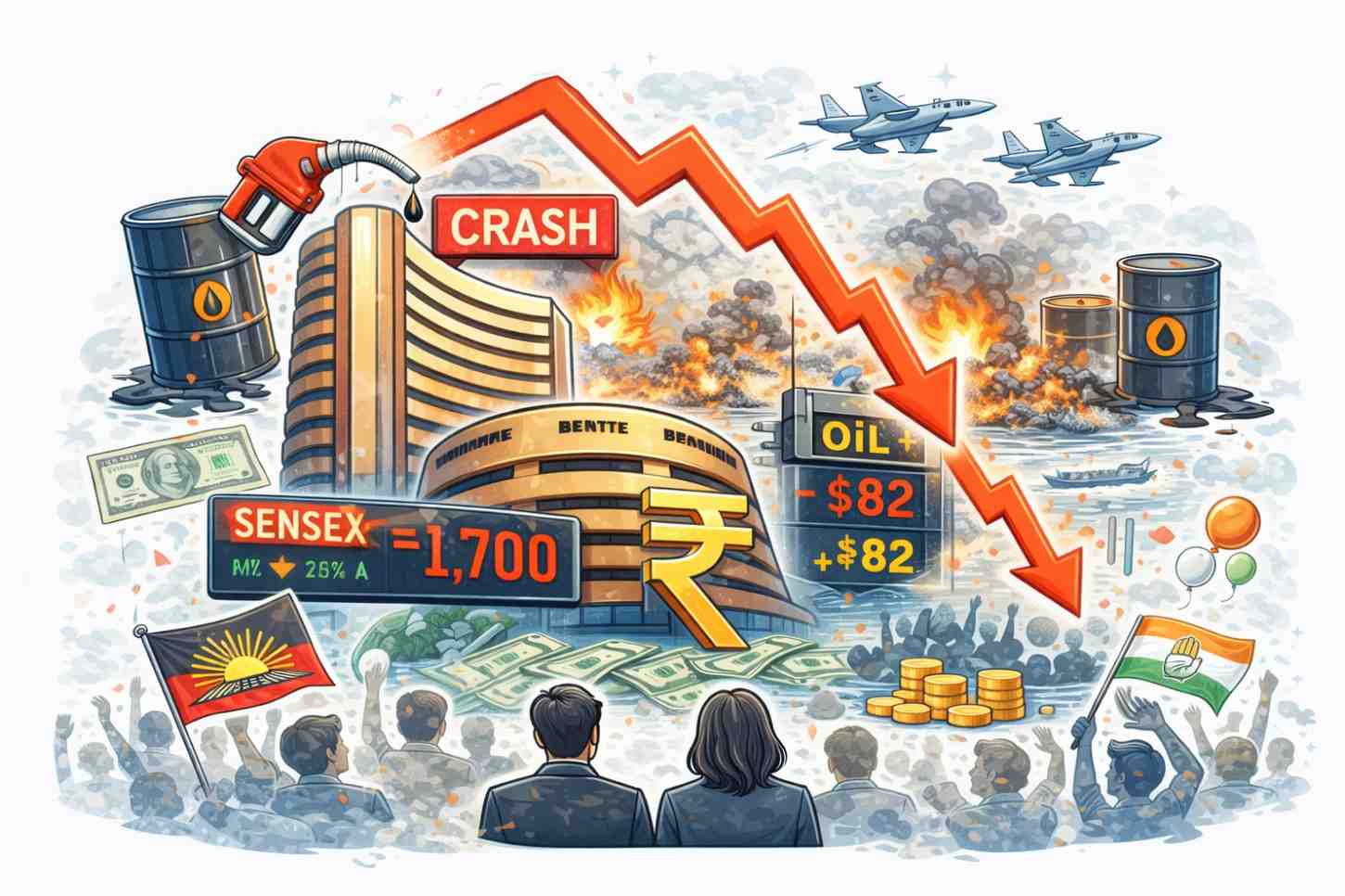
Indian equity markets witnessed a sharp sell-off today, with the BSE Sensex and Nifty 50 falling over 2% intraday amid escalating geopolitical tensions in West Asia. The decline comes as crude oil prices surged past $82 per barrel, following disruptions linked to the strategically vital Strait of Hormuz.
The development has triggered widespread concern among investors, given India’s heavy dependence on oil imports and the cascading impact of rising energy costs on inflation, corporate margins, and overall economic stability.
What Triggered Today’s Market Fall?
Geopolitical Tensions and Oil Supply Concerns
The immediate catalyst for the market downturn is the escalation of conflict in West Asia, which has raised fears of supply disruptions through the Strait of Hormuz—a critical chokepoint that handles a significant portion of global oil shipments.
Any instability in this region typically leads to:
- Supply uncertainty in global oil markets
- Spike in crude prices
- Increased volatility across financial markets
Surge in Crude Oil Prices
Crude oil crossing the $82 mark has direct implications for India. As one of the world’s largest oil importers, higher crude prices increase the country’s import bill and put pressure on the rupee.
This, in turn, affects:
- Fuel prices
- Inflation levels
- Fiscal balance
Global Market Sentiment
Weak cues from global markets further contributed to the sell-off. Investors often react to geopolitical risks by moving away from equities toward safer assets, leading to broad-based declines.
Sector-Wise Impact
Oil Marketing Companies (OMCs)
Companies in the oil marketing space tend to face margin pressure when crude prices rise sharply, especially if fuel price hikes are delayed or regulated.
Aviation Sector
Airlines are particularly vulnerable, as aviation turbine fuel (ATF) costs rise with crude oil prices, increasing operational expenses.
FMCG and Consumer Goods
Rising fuel costs can lead to higher transportation and input costs, impacting margins for fast-moving consumer goods companies.
Banking and Financials
Banking stocks often decline during market-wide sell-offs due to risk aversion and concerns over economic slowdown.
Why a 2% Fall Matters
A decline of over 1,700 points on the Sensex is significant because:
- It reflects strong negative sentiment
- It indicates widespread selling across sectors
- It can trigger panic among retail investors
However, market corrections are not uncommon, especially during periods of global uncertainty.
Impact on Retail Investors
Portfolio Value Erosion
Investors may see a temporary decline in portfolio value, particularly if holdings are concentrated in affected sectors.
Increased Volatility
Market swings may become more frequent in the short term, making timing decisions more challenging.
SIP Investors Remain Relatively Stable
For long-term investors using Systematic Investment Plans (SIPs), short-term volatility often has limited impact if investments continue consistently.
What Should Investors Do Now?
Avoid Panic Selling
Sharp declines can trigger emotional reactions, but selling during a downturn may lock in losses.
Review Asset Allocation
Investors should ensure their portfolios are diversified across sectors and asset classes to manage risk.
Focus on Fundamentals
Companies with strong balance sheets and stable earnings are generally better positioned to withstand volatility.
Monitor Oil Price Trends
Given the current trigger, crude oil movements will remain a key factor influencing market direction in the near term.
Broader Economic Implications
Inflationary Pressure
Higher oil prices can lead to increased inflation, affecting household budgets and consumption.
Currency Impact
A rising import bill may put pressure on the Indian rupee, influencing foreign investment flows.
Policy Response
Authorities may monitor the situation closely, with potential measures to manage inflation and market stability if volatility persists.
What to Watch Going Forward
- Developments in West Asia and stability of oil supply routes
- Movement in global crude prices
- Response from central banks and policymakers
- Foreign institutional investor (FII) activity
These factors will play a crucial role in determining whether the current decline is temporary or part of a broader trend.
Conclusion
Today’s sharp fall in the Sensex and Nifty underscores the sensitivity of Indian markets to global geopolitical developments, particularly those affecting oil supply. While rising crude prices have triggered immediate concerns, long-term investors should focus on fundamentals and avoid reactionary decisions.
As the situation evolves, market direction will largely depend on geopolitical stability and energy price trends—making it essential for investors to stay informed and adopt a disciplined approach to portfolio management.
Last Updated on: Wednesday, March 4, 2026 11:47 pm by Indian News Bulletin Team | Published by: Indian News Bulletin Team on Wednesday, March 4, 2026 8:40 pm | News Categories: News
About The Author