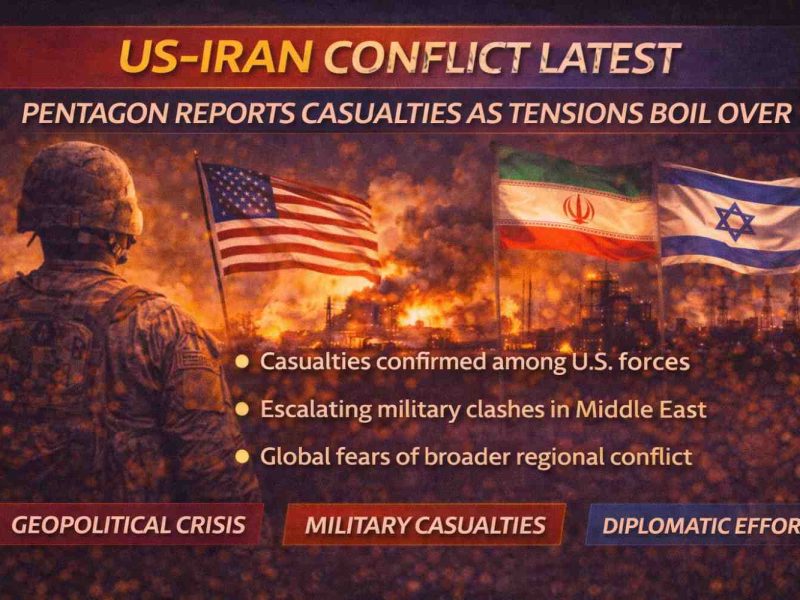
Tensions in West Asia escalated sharply on Wednesday evening after Iran launched a fresh wave of missile strikes targeting Israel, with multiple projectiles reportedly hitting buildings in the commercial hub of Tel Aviv.
The attack appears to have abruptly ended a fragile five-day pause in hostilities, raising fears of a broader regional conflict and triggering renewed global concern over security, energy supplies, and diplomatic stability.
Authorities in Israel confirmed that emergency services were deployed across affected areas as air-raid sirens sounded in several parts of the country.
Missile Strikes Rock Tel Aviv
Preliminary reports indicate that several missiles or missile fragments struck urban locations in Tel Aviv, causing structural damage to residential and commercial buildings.
Emergency responders rushed to the sites to:
- Evacuate civilians
- Provide medical assistance
- Assess damage to infrastructure
While official casualty figures were not immediately released, local media footage showed smoke rising from impacted buildings and debris scattered across streets, underscoring the intensity of the strikes.
Israel’s air defence systems were reportedly activated during the attack, intercepting some incoming missiles, though others appear to have penetrated defences.
‘Pause’ in Hostilities Appears to Collapse
The latest escalation comes after what had been described as a temporary operational pause in cross-border attacks.
Diplomatic sources had earlier suggested that both sides were reducing active operations amid international pressure to prevent further escalation.
However, the fresh missile barrage suggests that the pause may have been tactical rather than a formal ceasefire, leaving the situation highly volatile.
Observers say the renewed strikes could lead to retaliatory action, raising the risk of prolonged confrontation.
Regional and Global Reactions
Governments and international organizations have begun monitoring developments closely, with several calling for restraint.
Security analysts warn that intensified hostilities between Iran and Israel could:
- Disrupt global energy markets
- Increase risks to shipping routes
- Heighten instability across neighbouring regions
- Influence financial markets and investor sentiment
Global oil prices and stock markets have already shown sensitivity to geopolitical tensions in the Middle East in recent weeks.
Impact on Civilians and Urban Life
For residents of Tel Aviv, the strikes have renewed anxiety about safety and daily life.
Air-raid sirens forced many people to seek shelter, while transport and commercial activity faced temporary disruptions.
Urban missile attacks often have cascading effects beyond immediate damage, including:
- Power and communication outages
- School closures
- Business interruptions
- Psychological stress among civilians
Emergency preparedness protocols remain active across major Israeli cities.
Military and Strategic Implications
The latest developments signal a potential shift in the operational tempo of the conflict.
Experts note that missile exchanges targeting major cities carry symbolic and strategic significance, as they can influence domestic morale and international diplomatic positioning.
The effectiveness of missile defence systems and retaliatory capabilities will likely shape how the situation evolves in the coming days.
At the same time, regional allies and global powers may increase diplomatic engagement to prevent a wider conflict.
Economic and Energy Market Concerns
Renewed escalation between Iran and Israel could have far-reaching consequences for global markets.
The Middle East remains central to global oil production and shipping routes. Any disruption linked to military escalation may:
- Push crude oil prices higher
- Affect inflation trends globally
- Increase volatility in equity markets
- Influence currency movements in emerging economies
Investors are expected to track developments closely, particularly signals related to escalation or de-escalation.
What Happens Next
The immediate focus remains on whether further missile strikes or military responses will follow.
Key developments to watch include:
- Official casualty and damage assessments
- Possible retaliatory action
- Diplomatic interventions by global powers
- Statements from military and political leadership
The situation remains fluid, and updates are expected as more verified information becomes available.
Conclusion
The fresh missile strikes by Iran on urban areas in Tel Aviv mark a serious escalation in the ongoing confrontation with Israel.
With the apparent breakdown of the five-day pause in hostilities, fears of wider regional instability have intensified.
As emergency responses continue and global leaders call for restraint, the coming hours and days will be critical in determining whether tensions spiral further or diplomatic efforts succeed in preventing a deeper conflict.
Last Updated on: Tuesday, March 24, 2026 4:26 pm by Bollu Dikshitha | Published by: Bollu Dikshitha on Tuesday, March 24, 2026 4:26 pm | News Categories: Politics
About The Author