
New Delhi — In a defining shift for digital governance and individual rights, India has ushered in a new era of privacy protection with the implementation of the Digital Personal Data Protection Act, 2023 (DPDP Act) and its accompanying rules, marking one of the most significant transformations in the country’s legal landscape since the Supreme Court recognised privacy as a fundamental right in 2017.
Signed into law by Parliament in August 2023, the DPDP Act was always intended to set a comprehensive statutory framework for how personal information is collected, processed, retained, and secured across the digital ecosystem — but it remained largely theoretical until the Government formally notified the Digital Personal Data Protection Rules, 2025in November 2025, bringing the Act into force in a phased manner.
From Principle to Practice: Operationalising the Law
For years, Indians shared personal information across countless digital platforms — from social media and e‑commerce to fintech and government services — often without clear understanding of what data was collected, how it was used, or whom it was shared with. The DPDP Act, paired with the newly notified rules, seeks to change that by creating a legal architecture that emphasises transparency, accountability and individual control.
The operationalisation of the Act through the 2025 rules establishes procedural benchmarks and obligations for organisations and data processors — referred to in the law as “Data Fiduciaries” — and outlines the rights of individuals, known in legal terms as “Data Principals”.
Rights of the Individual in the Digital Age
Under the new regime, citizens gain a suite of rights that were previously unrecognised in law. Individuals can now seek clear, verifiable consent from organisations before their digital personal data is collected. They also have the right to know how their data is being used, to access and correct inaccuracies, to request updates, and even to erase personal data in specified circumstances. The framework allows citizens to nominate another person to exercise these rights on their behalf, providing important safeguards for those unable to act for themselves.
These rights are backed by enforceable timelines: organisations must respond within defined windows; individuals have access to complaint mechanisms; and a new institutional body, the Data Protection Board of India, has been established to adjudicate disputes and oversee compliance.
A Phased Rollout with High Stakes for Compliance
The enforcement of the DPDP Act is not instantaneous in its entirety but unfolds over a structured timeline. While some provisions came into force immediately with the notification of the rules, others — such as requirements for consent management systems, breach notifications and full compliance obligations for large organisations — will become binding over the next 12 to 18 months. This phased approach is designed to give businesses and institutions time to adapt systems, train personnel, and align technical and organisational processes with the new legal standards.
At the same time, the law imposes stringent penalties for non‑compliance. Organisations that fail to protect personal data or violate prescribed obligations face fines that can run into hundreds of crores of rupees, underscoring the seriousness with which the Government views data protection enforcement.
Special Safeguards and Sensitive Data Considerations
In recognition of the unique vulnerabilities of certain groups, the rules explicitly mandate verifiable parental consentbefore digital platforms can process the personal data of children. There are also provisions for enhanced security expectations and more rigorous due diligence for entities classified as Significant Data Fiduciaries, such as major social media networks, large‑scale payment apps, and platforms handling high volumes of sensitive information.
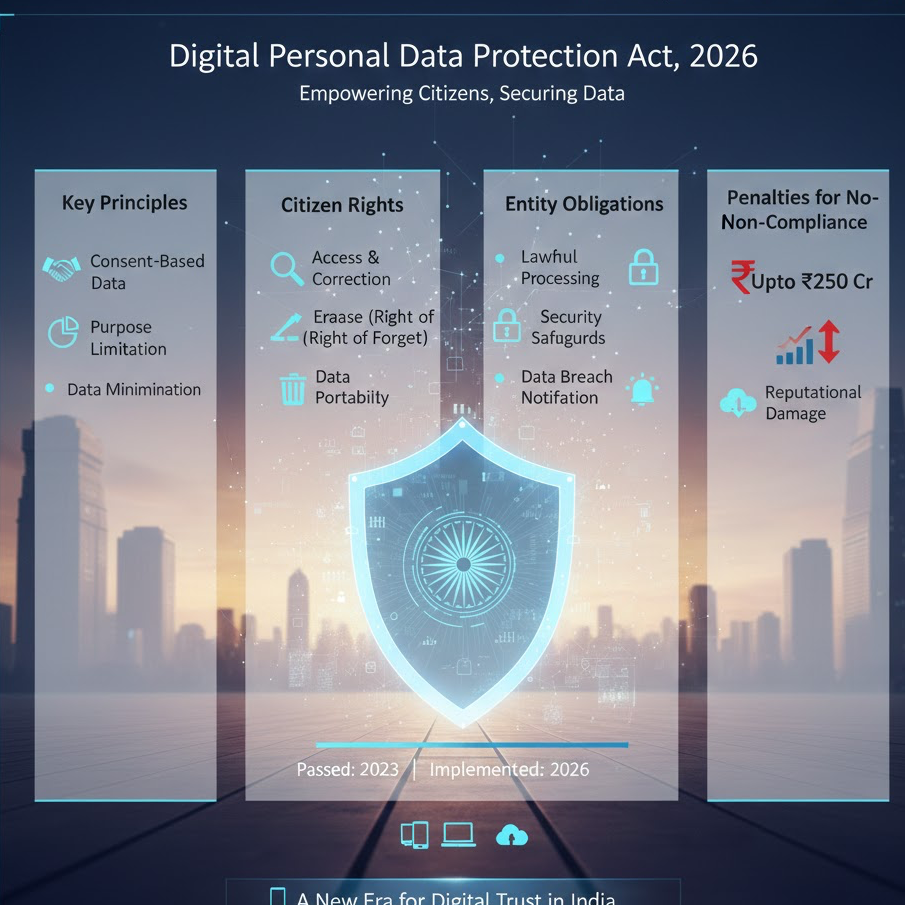
For incidents involving data breaches, the rules require organisations not only to report the event to the Data Protection Board but also to notify affected individuals in clear, plain language, detailing what happened, the potential consequences, and steps being taken to address the fallout.
Balancing Privacy and Public Interest: Debates and Criticisms
Despite the promise of greater individual control and stronger regulatory guardrails, the law has not been without controversy. Critics point to amendments that recalibrate the scope of other key statutes like the Right to Information Act, limiting citizens’ access to personal information even in the public interest — a development that some commentators argue undermines transparency and accountability.
Civil liberties groups and press freedom advocates have also raised concerns that certain provisions could tilt the balance of power in favour of the state, diluting hard‑won safeguards for investigative journalism and public scrutiny. These debates reflect broader questions about how privacy, freedom of information, and state authority coexist in a democratic digital society.
Towards a Trusted Digital Future
Proponents of the DPDP Act argue that, despite implementation challenges and debates over specific provisions, the new legal framework represents a watershed moment for India’s digital economy and civic life. With explicit rights for individuals and enforceable standards for data controllers, the law aims to build trust in digital services, stimulate responsible innovation, and align India with global norms of data protection. Government officials have reiterated that the Act will boost confidence among users and position India as a trustworthy hub in the digital world.
As the phased rollout continues through 2026 and into 2027, the strength of the law will ultimately depend on its implementation — how seriously organisations take their obligations, how efficiently the Data Protection Board resolves grievances, and how accessible the new rights are in practice for everyday citizens. What is clear is that for millions of Indians navigating a rapidly digitising society, the Digital Personal Data Protection Act marks a profound shift toward placing privacy and data safety at the heart of the digital experience.
Also read : https://indiapioneer.in/mumbai-navi-mumbai-gold-line-metro-key-routes-travel-time-and-impact-on-real-estate/
Add indianewsbulletin.in as a preferred source on google – click here
Last Updated on: Wednesday, January 28, 2026 12:53 pm by Indian News Bulletin Team | Published by: Indian News Bulletin Team on Wednesday, January 28, 2026 12:53 pm | News Categories: News
About The Author
