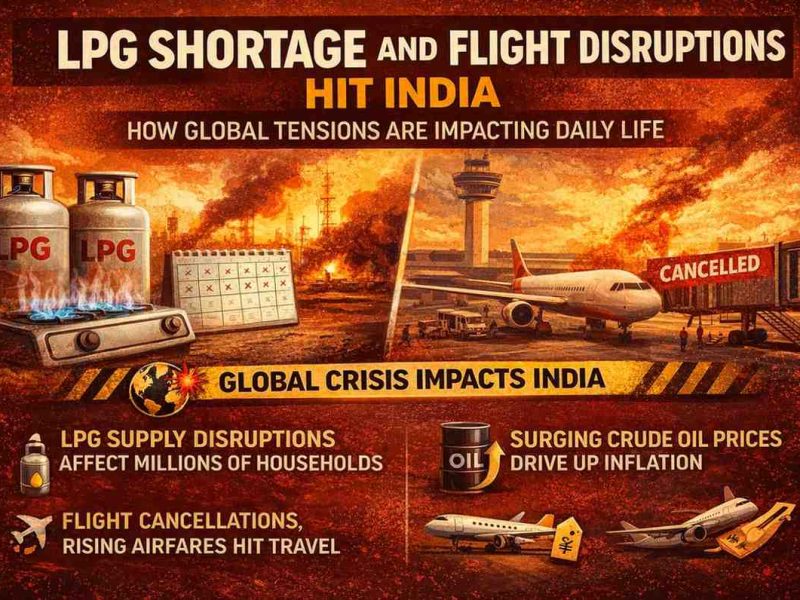
Oil Prices, Global Inflation Trends and Currency Movements Shape India’s Growth Outlook
Global economic conditions are once again at the forefront of financial conversations in India. With energy markets turning volatile and inflationary pressures persisting across major economies, Indian households, investors and policymakers are closely tracking international indicators that could influence domestic prices, growth and market stability.
As one of the world’s fastest-growing major economies — and a significant importer of crude oil — India remains deeply connected to global commodity cycles, supply chain shifts and monetary policy decisions in advanced economies. The interplay between rising inflation abroad, fluctuating crude oil prices and currency movements is shaping India’s macroeconomic environment in 2026.
This article examines how global inflation and energy markets are affecting India’s economy, what key indicators suggest, and what risks and opportunities lie ahead.
Why Global Inflation Still Matters for India
Inflation has moderated in many advanced economies compared to post-pandemic peaks. However, it has not fully stabilised. Price pressures in energy, food and services remain sensitive to geopolitical disruptions and supply constraints.
For India, global inflation matters in three primary ways:
- Imported Inflation
When global commodity prices rise — particularly oil, natural gas, fertilisers and edible oils — India faces higher import bills. Since these inputs are critical to domestic production and consumption, the impact can filter into consumer prices. - Exchange Rate Sensitivity
A stronger U.S. dollar, often driven by global inflation or tighter monetary policy in advanced economies, can weaken emerging market currencies. A weaker rupee makes imports more expensive, amplifying inflationary effects. - Capital Flow Volatility
Elevated global interest rates can redirect foreign investment toward developed markets. This can affect Indian equity and debt markets, influencing liquidity and borrowing costs.
India’s inflation trajectory, therefore, cannot be assessed in isolation from global price movements.
Energy Markets: The Biggest Transmission Channel
Energy remains the most direct and powerful channel through which global conditions affect India’s economy.
India’s Oil Import Dependence
India imports roughly 85% of its crude oil requirement. This structural dependence means international oil prices have a direct bearing on:
- Petrol and diesel prices
- Transport and logistics costs
- Manufacturing input costs
- Fertiliser production
- Power generation expenses
Even modest increases in global crude prices can influence inflation expectations and fiscal calculations.
Crude Oil Volatility and Its Domestic Impact
Global crude benchmarks have shown renewed volatility amid geopolitical tensions and production adjustments by major oil-producing nations. Any sustained rise in prices increases India’s import bill, widens the trade deficit and exerts pressure on the rupee.
Higher oil prices typically translate into:
- Increased fuel costs
- Rising freight rates
- Costlier consumer goods
- Pressure on government fuel subsidies (if implemented)
Because fuel is embedded across the supply chain, its inflationary impact extends beyond petrol pumps to food prices and consumer essentials.
Inflation in India: Balancing Domestic and Global Pressures
India’s inflation has remained relatively contained compared to several major economies, but risks remain.
The two main inflation measures tracked domestically are:
- Consumer Price Index (CPI) – reflecting retail inflation
- Wholesale Price Index (WPI) – reflecting producer-level price trends
While food price moderation has helped stabilise headline inflation at times, renewed pressure from energy markets can complicate the outlook.
Cost-Push vs Demand-Pull Inflation
India’s inflation concerns in 2026 are largely cost-driven rather than demand-driven. Rising import costs — especially energy and commodities — contribute to cost-push inflation.
Domestic demand remains resilient, supported by:
- Urban consumption
- Government capital expenditure
- Manufacturing expansion
- Services sector strength
The challenge for policymakers lies in ensuring that imported inflation does not spill over into broader price instability.
Role of the Reserve Bank of India in Managing Volatility
The Reserve Bank of India plays a central role in navigating inflation and currency pressures.
Key tools include:
- Interest rate adjustments
- Liquidity management
- Foreign exchange market interventions
- Forward guidance to anchor inflation expectations
If global inflation remains elevated or oil prices surge, the RBI may adopt a cautious monetary stance to maintain price stability.
However, tightening policy excessively could slow economic growth. This creates a delicate balance between containing inflation and supporting expansion.
Currency Movements and the Rupee’s Stability
The Indian rupee’s performance is closely tied to:
- Global oil prices
- U.S. Federal Reserve policy
- Foreign portfolio investment flows
- Trade deficit trends
When oil prices rise sharply, India’s import bill expands, often exerting downward pressure on the rupee. A weaker currency, in turn, raises the cost of imports — reinforcing inflation risks.
Conversely, strong foreign direct investment (FDI) inflows and stable capital markets can support currency resilience.
India’s foreign exchange reserves remain a critical buffer against external shocks, helping smooth volatility during periods of global uncertainty.
Impact on Household Budgets
For Indian households, the most visible impact of global inflation and energy volatility appears in:
- Fuel prices
- LPG cylinder costs
- Grocery bills
- Transportation fares
Even when headline inflation appears moderate, rising fuel and food costs can affect disposable income and consumer sentiment.
Lower-income households are disproportionately affected because a larger share of their income is spent on essential goods.
If energy prices remain elevated, consumption patterns may shift toward essentials, affecting discretionary sectors such as consumer durables and retail.
Manufacturing, Services and Growth Momentum
Despite global headwinds, India’s growth trajectory remains comparatively strong.
Manufacturing Resilience
Government initiatives aimed at boosting domestic production — including supply chain diversification and infrastructure expansion — have strengthened manufacturing output.
However, higher input costs linked to energy and imported raw materials can compress margins for manufacturers.
Services Sector Strength
India’s services sector — particularly IT, financial services and digital platforms — remains a major growth engine. Since services are less energy-intensive than heavy manufacturing, they provide partial insulation from oil shocks.
That said, global slowdowns in advanced economies could affect export-oriented service sectors.
Trade Deficit and External Balance
Energy imports significantly influence India’s trade balance.
A sustained rise in oil prices can:
- Expand the trade deficit
- Increase current account pressures
- Affect sovereign credit perceptions
However, strong exports in pharmaceuticals, services and engineering goods help offset some of these pressures.
Diversifying energy sources — including renewables and alternative supply routes — remains a strategic priority for reducing vulnerability to global price shocks.
Global Growth Outlook and Spillover Risks
Global economic growth projections remain mixed. While some advanced economies show signs of stabilisation, risks persist:
- Geopolitical tensions
- Supply chain disruptions
- Commodity price volatility
- Tight financial conditions
For India, slower global growth could affect export demand. However, robust domestic demand provides a significant buffer.
India’s economic fundamentals — including a large domestic market, demographic dividend and infrastructure push — support medium-term resilience despite global volatility.
Energy Diversification and Long-Term Strategy
India’s long-term response to global energy market instability includes:
- Expanding renewable energy capacity
- Increasing strategic petroleum reserves
- Strengthening trade partnerships
- Investing in domestic refining capacity
Reducing energy import vulnerability is central to improving macroeconomic stability.
The transition toward solar, wind and green hydrogen is also aligned with climate commitments and long-term cost efficiency goals.
What Investors and Businesses Should Monitor
Key global indicators influencing India in 2026 include:
- International crude oil benchmarks
- U.S. Federal Reserve policy decisions
- Global inflation readings
- Commodity price indices
- Capital flow trends into emerging markets
Monitoring these variables helps anticipate shifts in domestic interest rates, currency movements and market sentiment.
The Road Ahead: Stability with Vigilance
India enters 2026 with relative macroeconomic stability compared to many global peers. Inflation remains manageable, growth is steady, and financial systems are resilient.
However, rising global inflation and energy market volatility underscore a key reality: India’s economy is deeply interconnected with global developments.
The challenge ahead lies in maintaining growth momentum while insulating households and businesses from external shocks.
Prudent monetary policy, diversified energy sourcing, strong foreign exchange buffers and disciplined fiscal management will be central to navigating this complex global environment.
For Indian readers, the takeaway is clear — global economic indicators are not distant abstractions. They directly influence fuel prices, inflation, investment returns and overall economic confidence.
In an increasingly interconnected world, understanding these linkages is essential for informed financial and policy decisions.
Last Updated on: Monday, February 23, 2026 9:26 pm by Indian News Bulletin Team | Published by: Indian News Bulletin Team on Monday, February 23, 2026 9:26 pm | News Categories: News
About The Author