Introduction
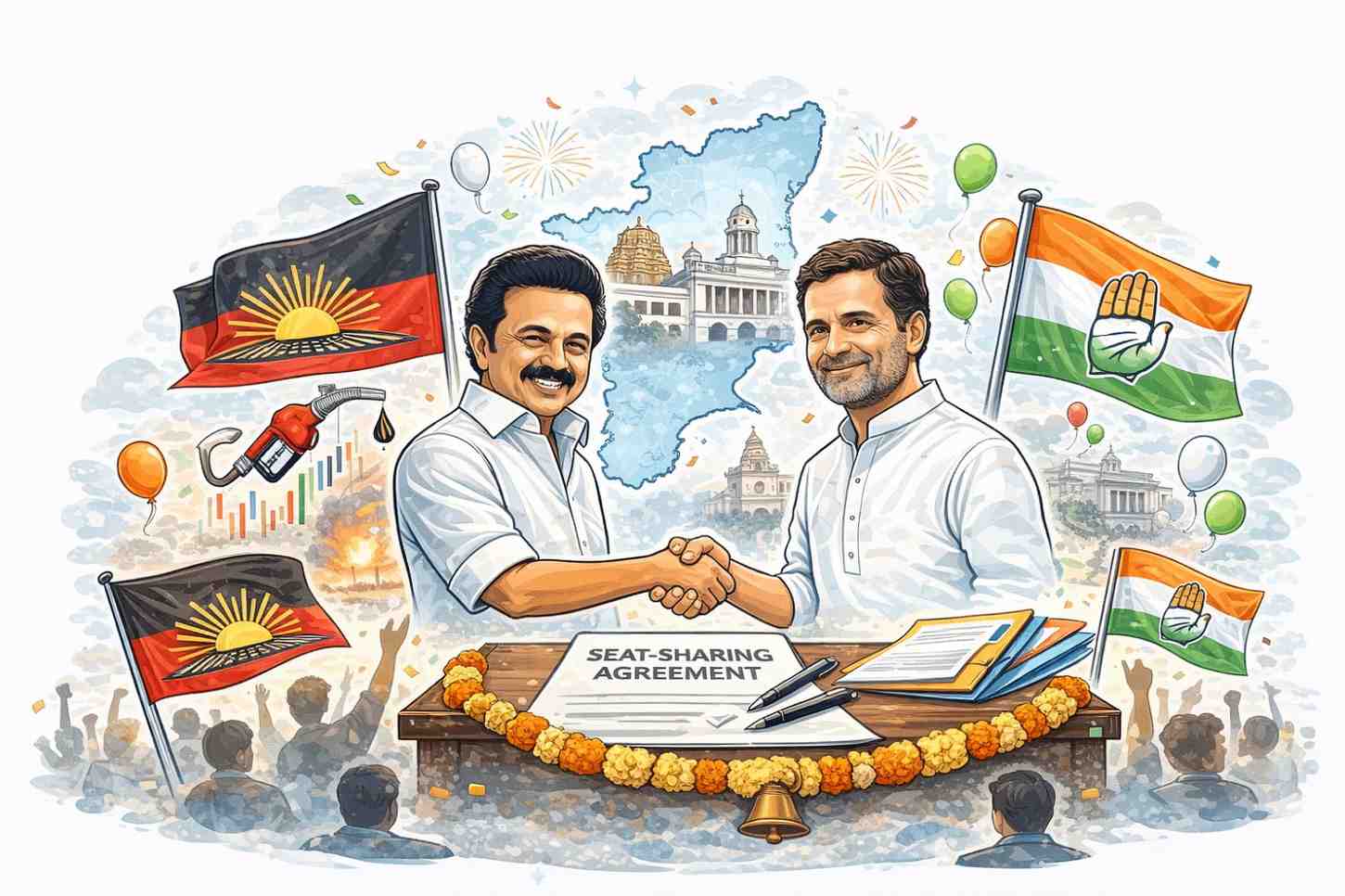
In a significant political development ahead of the Tamil Nadu Assembly elections, the Dravida Munnetra Kazhagam (DMK) and the Indian National Congress are set to formalise their seat-sharing agreement, reinforcing a long-standing alliance that has shaped the state’s electoral landscape.
The move is being closely watched as a key indicator of opposition unity and electoral strategy in one of India’s most politically active states. With negotiations reaching their final stage, the agreement is expected to define the contours of the alliance’s campaign in the 2026 polls.
Seat-Sharing Pact: What We Know So Far
While official confirmation of exact numbers is awaited, party leaders from both sides have indicated that discussions have progressed smoothly, with a consensus likely on the distribution of constituencies.
Historically, the DMK has contested a majority of seats as the dominant regional force, while the Congress has taken a smaller but strategically significant share. The current negotiations are expected to follow a similar pattern, with adjustments based on ground realities and electoral calculations.
Key factors influencing seat allocation include:
- Past electoral performance in constituencies
- Caste and community demographics
- Winnability and candidate strength
- Alliance coordination with smaller partners
Political Significance of the DMK–Congress Alliance
Strengthening Opposition Unity
The alliance signals continued cooperation between regional and national opposition forces. In Tamil Nadu, where regional parties dominate, partnerships with national parties like Congress add organisational depth and broader narrative framing.
Consolidation of Vote Share
By contesting together, the DMK and Congress aim to avoid vote fragmentation, particularly in constituencies where anti-incumbency or multi-cornered contests could influence outcomes.
Strategic Messaging
The alliance is expected to focus on governance, welfare schemes, and regional identity—core themes that have historically resonated with Tamil Nadu voters.
Role of Key Leaders
The negotiations have been closely overseen by senior leadership from both parties, including M. K. Stalin, who leads the DMK, and top Congress functionaries responsible for Tamil Nadu affairs.
Leadership coordination is crucial not only for seat-sharing but also for campaign planning, candidate selection, and messaging consistency.
Impact on Other Alliances
The finalisation of the DMK–Congress pact is likely to trigger strategic recalibrations among rival alliances in the state.
AIADMK and NDA Dynamics
Opposition parties, including the All India Anna Dravida Munnetra Kazhagam (AIADMK) and alliances linked to the Bharatiya Janata Party (BJP), are expected to respond with their own seat-sharing strategies and campaign narratives.
Smaller Regional Parties
Regional and caste-based parties will play a crucial role in shaping final electoral equations, as alliances often depend on micro-level vote mobilization.
Electoral Context: Tamil Nadu’s Political Landscape
Tamil Nadu has traditionally witnessed bipolar contests dominated by the DMK and AIADMK alliances. National parties typically play a supporting role within these broader coalitions.
Key characteristics of the state’s elections include:
- High voter turnout
- Strong regional identity politics
- Importance of welfare schemes and governance track record
- Influence of alliance arithmetic
The DMK-led alliance’s performance will depend on its ability to maintain cohesion while appealing to a diverse voter base.
What to Watch Next
As the seat-sharing pact is formalised, attention will shift to:
Candidate Announcements
Selection of candidates will be critical in determining electoral competitiveness.
Campaign Strategy
Messaging, rallies, and digital outreach will shape voter perception.
Alliance Expansion
Inclusion of smaller parties could further strengthen the coalition.
Opposition Response
Counter-strategies from rival alliances will influence the overall contest.
Conclusion
The finalisation of the DMK–Congress seat-sharing pact marks a crucial milestone in the run-up to the Tamil Nadu Assembly elections. By reinforcing their alliance, both parties aim to present a united front and maximise electoral advantage.
As political activity intensifies, the agreement sets the stage for a closely watched contest that will not only shape Tamil Nadu’s governance but also contribute to the broader national political narrative.
Last Updated on: Wednesday, March 4, 2026 11:39 pm by Indian News Bulletin Team | Published by: Indian News Bulletin Team on Wednesday, March 4, 2026 8:38 pm | News Categories: India
About The Author
