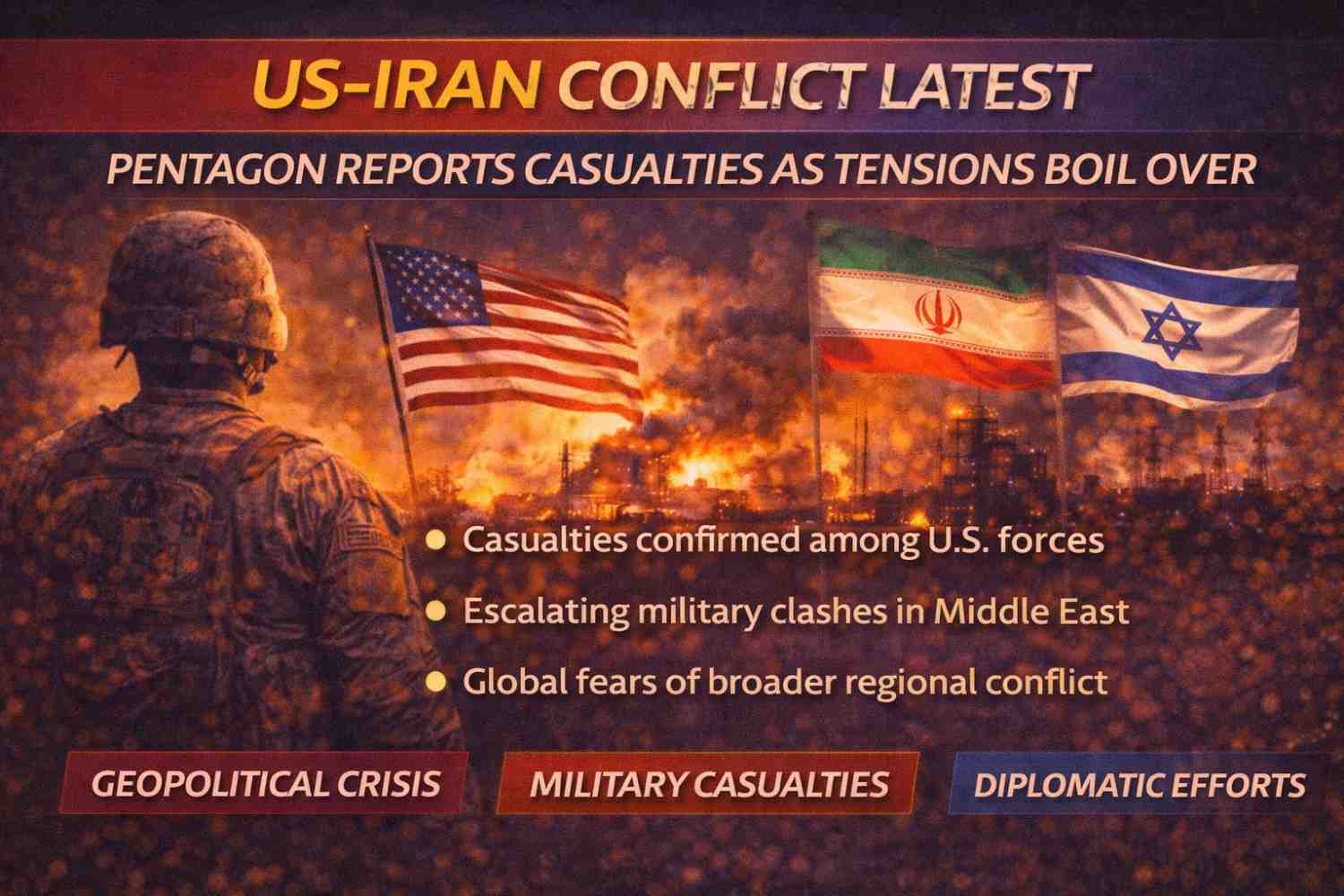
The escalating confrontation between the United States, Iran, and regional actors including Israel has pushed Middle East tensions to one of their most volatile points in recent years. Recent updates from the Pentagon indicate that American forces have suffered casualties as military exchanges intensify, raising fears of a broader regional conflict.
The crisis has unfolded amid a series of missile strikes, drone attacks, and retaliatory air operations that have drawn global attention. With geopolitical tensions rising rapidly, governments and international observers are closely monitoring the situation to determine whether the conflict could expand beyond its current scope.
For global security analysts and policymakers, the developments mark a critical moment in Middle Eastern geopolitics, with potential implications for global stability, energy markets, and international diplomacy.
Pentagon Confirms Casualties Among U.S. Forces
The United States Department of Defense has acknowledged that several American service members have been killed and many others injured during the early stages of the conflict. The casualties occurred during attacks targeting military facilities hosting U.S. personnel across the Middle East.
Defense officials say most of the injuries were caused by missile and drone strikes directed at bases where American forces are deployed. While a number of personnel have returned to duty after treatment, others remain hospitalized.
The Pentagon has emphasized that protecting U.S. troops and military infrastructure remains a top priority as the situation evolves.
How the Conflict Escalated
The latest crisis follows a rapid escalation of hostilities involving military actions by the United States and Israel against Iranian-linked targets. The strikes were aimed at disrupting military capabilities believed to pose security threats in the region.
Iran responded with retaliatory attacks using missiles and unmanned aerial vehicles aimed at locations associated with U.S. military presence. These exchanges have expanded across several countries in the Middle East where American forces are stationed.
The cycle of strikes and counterstrikes has significantly heightened tensions, prompting concerns among international leaders about the risk of further escalation.
Israel’s Role in the Confrontation
Israel’s involvement in operations targeting Iranian-linked infrastructure has added another dimension to the conflict. Israeli authorities have long expressed concerns about Iran’s regional military activities and missile capabilities.
The cooperation between the United States and Israel in security operations has reinforced the strategic alliance between the two countries. However, it has also intensified geopolitical friction with Iran and its regional partners.
Analysts warn that the involvement of multiple military actors increases the risk of the confrontation expanding into a broader regional conflict.
Strategic Objectives Behind the Military Operations
Officials involved in the operations say the military actions are intended to limit Iran’s ability to conduct attacks and to weaken networks considered threats to regional security.
Key objectives of the campaign include:
- Disrupting missile and drone capabilities
- Protecting military bases and personnel
- Deterring further attacks on allied facilities
- Maintaining stability in strategic maritime routes
Military planners also aim to reduce the operational capabilities of forces aligned with Iran across the region.
However, analysts caution that prolonged military campaigns can carry unpredictable consequences.
Regional Security Concerns
The Middle East remains one of the most strategically sensitive regions in the world. Several countries host U.S. military bases and are closely connected through security partnerships.
As tensions increase, regional governments are watching developments carefully while assessing potential risks to their own security environments.
Military analysts note that conflicts involving major regional powers often carry the risk of drawing additional actors into the confrontation.
This possibility has heightened international calls for restraint and diplomatic engagement.
Impact on Global Energy Markets
The geopolitical crisis has also raised concerns about global energy stability.
The Middle East plays a critical role in global oil supply, and any conflict in the region has the potential to influence international energy markets. Shipping routes used for transporting crude oil and natural gas pass through strategic waterways that could be affected by heightened military activity.
Market observers say geopolitical uncertainty typically triggers volatility in oil prices as investors respond to potential supply disruptions.
Countries dependent on energy imports are therefore closely monitoring the situation.
Diplomatic Efforts to Reduce Tensions
Amid the rising hostilities, diplomatic efforts are underway to prevent the crisis from escalating further.
International leaders and organizations have urged all sides to exercise restraint and seek dialogue to resolve disputes. Diplomatic channels remain active as governments attempt to manage tensions and avoid a wider conflict.
Negotiations aimed at reducing hostilities could play a key role in determining how the situation evolves.
However, the success of diplomatic initiatives will depend on the willingness of all parties to engage in dialogue.
Humanitarian Concerns
In addition to military developments, humanitarian concerns are growing as the conflict continues.
Military operations and retaliatory strikes can affect civilian areas and infrastructure, raising fears about potential humanitarian consequences if the conflict intensifies.
International organizations often monitor such situations closely, particularly when conflicts threaten essential services or public safety.
Ensuring the protection of civilians remains a critical concern during any military confrontation.
What Comes Next
Security experts say the coming weeks will be crucial in determining whether the conflict stabilizes or escalates further.
Several factors will influence the next phase of the crisis:
- The scale of future retaliatory strikes
- Military decisions by key actors
- Diplomatic negotiations aimed at de-escalation
- Responses from regional allies and partners
Any major escalation could reshape geopolitical dynamics across the Middle East and potentially affect global economic conditions.
Conclusion
The rising confrontation involving the United States, Iran, and Israel has pushed geopolitical tensions close to a critical threshold. With confirmed casualties among U.S. forces and continued military exchanges, the situation remains highly volatile.
For the international community, the developments underscore the fragile security environment in the Middle East and the importance of diplomatic efforts to prevent further escalation.
As military operations continue and diplomatic discussions unfold, global attention remains focused on whether the conflict will stabilize or expand into a wider regional crisis.
About the Author