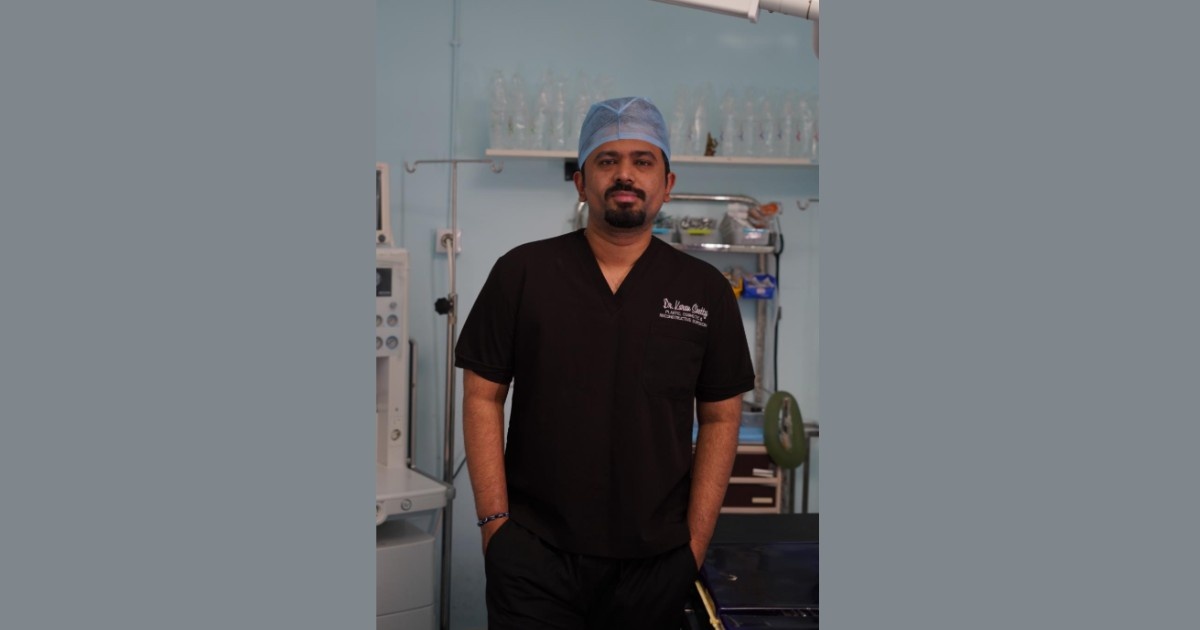
Bangalore, India – February 21, 2026 – Dr. Karan Shetty, board-certified plastic, aesthetic, and breast reconstructive surgeon at Tara Healthcare, recently presented his clinical insights on Vertical Scar Breast Reduction at the annual AESURG 2026 conference, hosted by the Indian Association of Aesthetic Plastic Surgeons (IAAPS). In this digital interview, Dr. Karan Shetty shares his perspective on evolving breast surgery techniques, patient awareness, and surgical decision-making.
Q: Dr. Karan Shetty, congratulations on your presentation at AESURG 2026! Can you tell us what your session was about?
Dr. Karan Shetty: Thank you. My session, titled “What Made Us Choose Vertical Scar Breast Reduction,” focused on why this technique is increasingly preferred over traditional methods. It allows for improved breast shaping, reduced scarring, and better long-term structural support while ensuring patient safety. I also discussed how careful case selection and individualized planning are critical to achieving consistent results.
Q: How has breast reduction surgery evolved in recent years?
Dr. Karan Shetty: Modern breast reduction isn’t just about reducing volume. Patients today expect a balance of functional relief—like back and neck comfort—and aesthetic refinement. Techniques like the vertical scar approach allow us to achieve natural contours, minimal visible scarring, and quicker recovery, while still addressing medical concerns.
Q: What sets the vertical scar technique apart from traditional anchor methods?
Dr. Karan Shetty: The traditional inverted-T approach often leaves a longer horizontal scar and can require extensive tissue manipulation. Vertical scar reduction, sometimes called the “lollipop technique,” focuses on a scar around the areola and a vertical line down to the breast fold, which preserves vascularity, supports structural integrity, and enhances breast projection. It’s especially useful for patients seeking both functional and aesthetic improvement.
Q: Are more patients in Bangalore becoming aware of reconstructive breast options?
Dr. Karan Shetty: Absolutely. Awareness has grown tremendously. Patients now understand that breast reduction can be reconstructive as well as aesthetic, improving quality of life for those with macromastia or post-cancer changes. At Tara Healthcare, we emphasize patient education, ensuring individuals make informed, safe decisions about their care.
Q: Why is participation in conferences like AESURG important for surgeons?
Dr. Karan Shetty: Conferences allow surgeons to share clinical experiences, refine techniques, and learn from peers globally. Presenting at AESURG 2026 enabled me to discuss our outcomes, discuss challenges, and integrate feedback from leading international and Indian surgeons, which ultimately benefits my patients.
Q: Any final thoughts for women considering breast reduction surgery?
Dr. Karan Shetty: Every patient is unique, and surgery should be tailored to their anatomy, health, and expectations. Modern techniques like vertical scar breast reduction give us tools to deliver safe, durable, and natural-looking results. My advice is to consult a board-certified plastic and breast reconstructive surgeon who emphasizes safety, ethics, and individualized planning.
About Dr. Karan Shetty
Dr. Karan Shetty is a board-certified Plastic, Aesthetic, and Reconstructive Surgeon practicing in Bangalore, India. He completed advanced fellowships in aesthetic surgery from Germany, Japan, and Spain, and is a proud member of KAPRAS, ISAPS, and IAAPS. He specializes in hair restoration, mommy makeover, rhinoplasty, gynecomastia, eyelid rejuvenation, body contouring and is known for producing natural, and balanced results.
He is the Founder & Chief Plastic Surgeon at Tara Healthcare , Bangalore’s leading centre for Plastic Surgery and Aesthetics
About the Author