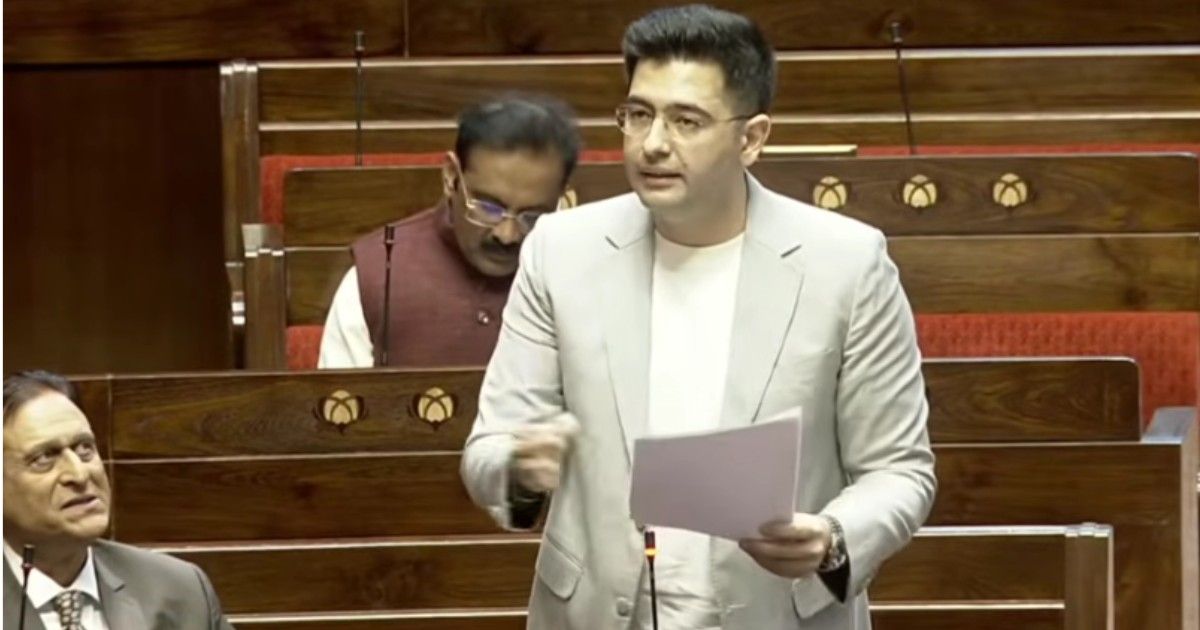
New Delhi: A proposal by Aam Aadmi Party (AAP) MP Raghav Chadha to introduce a “Right to Recall” law has triggered a wide political discussion on electoral accountability and democratic reforms in India. The proposal seeks to give voters the legal power to remove elected representatives before the completion of their term if they fail to perform their duties or lose public confidence.
Raising the issue in Parliament, Chadha said the absence of a recall mechanism leaves voters with limited options once an election is over, even in cases of poor performance or lack of accountability. He emphasised that the proposed law would operate within a clearly defined legal framework, with safeguards to prevent misuse, and would aim to strengthen democratic participation rather than weaken electoral stability.
What the Proposal Seeks to Do
According to statements made in Parliament, the proposed Right to Recall mechanism would allow citizens to initiate a process to recall their elected representative, subject to clearly defined legal safeguards. The idea is aimed at strengthening accountability by ensuring that elected officials remain answerable to voters throughout their term, and not only during elections.
Chadha argued that once elections are over, voters currently have limited options to hold non-performing representatives accountable until the next poll. The proposal, he said, is intended to bridge that gap within the democratic framework.
Current Legal Position in India
India’s Constitution does not currently provide for a right to recall elected representatives at the national or state level. Members of Parliament and state legislatures can be removed only through constitutional procedures such as disqualification, resignation, or in rare cases, expulsion by the House.
While recall provisions do not exist for MPs or MLAs, some local self-government laws in certain states allow voters to remove elected representatives at the panchayat or municipal level through established procedures.
Political Responses and Debate
The proposal has drawn mixed reactions across party lines. Supporters have described it as a step towards deeper democratic accountability, while critics have raised concerns about political stability, misuse, and the administrative challenges of implementing such a law.
Several lawmakers have emphasised that any such reform would require careful examination, wide consultation, and constitutional scrutiny. No timeline or legislative draft has been formally introduced so far.
Some political leaders have welcomed the discussion as an opportunity to review how elected representatives are held accountable between elections, noting that public trust in democratic institutions depends on sustained performance. Others have cautioned that a recall mechanism, if not narrowly defined, could lead to frequent political disruptions and place additional pressure on the electoral system.
Global Context
Right to Recall provisions exist in limited forms in some other democracies, mainly at local or regional levels. In most cases, these mechanisms are accompanied by strict thresholds, such as minimum voter participation and defined grounds for recall, to prevent frequent or politically motivated challenges.
In countries where recall provisions are in place, the process is typically designed with high procedural safeguards. These include requirements for a significant number of voter signatures, time limits within a representative’s term, and clear conditions under which a recall can be initiated. Such measures are intended to balance voter oversight with the need for continuity in governance and to ensure that recall efforts are not driven by short-term political interests.
What Happens Next
At present, Chadha’s proposal has initiated a policy-level discussion rather than a formal legislative process. Any move towards implementing a Right to Recall law would require extensive debate, legal vetting, and possible constitutional amendments.
For now, the proposal has brought the issue of voter empowerment and elected accountability back into the national political conversation, with Parliament expected to remain the primary forum for further discussion.
Also read: Top Stocks to Watch Today (11 Feb 2026): Titan, Apollo Hospitals, Ather Energy and Other Big Movers
Add India News Bulletin as a preferred source on Google – Click Here
About the Author