
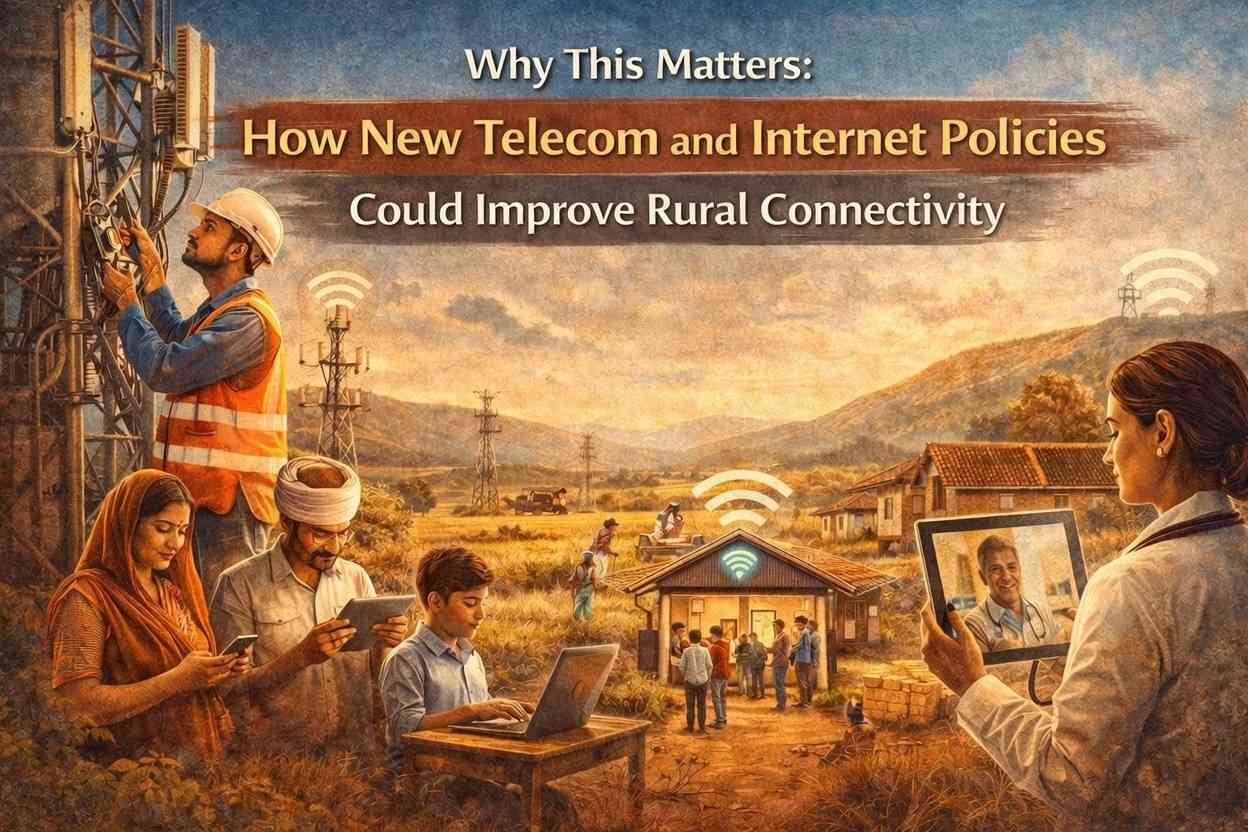
Access to reliable internet and mobile connectivity has become a basic necessity for economic participation, access to government services, education, healthcare, and social inclusion. Yet, a significant digital divide persists between urban and rural India. Recognising this gap, new telecom and internet policies introduced by the government aim to accelerate rural connectivity by improving infrastructure, affordability, and service quality. These changes carry far-reaching implications for millions living in villages and remote regions.
The Rural Connectivity Gap in India
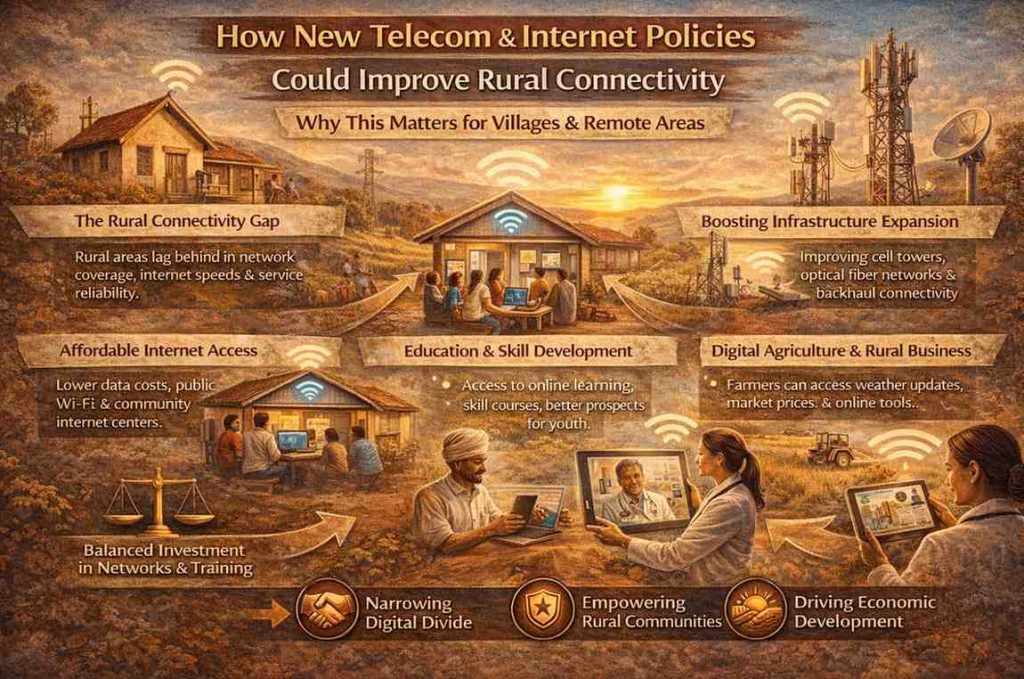
Despite rapid growth in mobile and internet usage nationwide, rural areas continue to lag behind cities in terms of network coverage, internet speeds, and service reliability. Difficult terrain, low population density, and high infrastructure costs have discouraged private investment in many remote regions. As a result, rural users often face slow data speeds, frequent call drops, and limited access to digital services.
This gap has broader consequences. Limited connectivity restricts access to online education, telemedicine, digital payments, and e-governance platforms, reinforcing economic and social inequalities. Closing this gap has therefore become a priority for policymakers.
Policy Focus on Infrastructure Expansion
One of the central pillars of the new telecom and internet policies is expanding physical infrastructure in underserved areas. This includes laying optical fibre networks, upgrading mobile towers, and improving backhaul connectivity in villages and remote districts. By prioritising last-mile connectivity, the policies aim to ensure that rural users are not left out of India’s digital growth story.
Public funding and incentives are being used to support infrastructure deployment in areas where private investment alone may not be commercially viable. This approach is intended to make connectivity a shared national responsibility rather than a market-driven outcome alone.
Encouraging Private Sector Participation
The new policy framework places strong emphasis on encouraging private telecom operators and internet service providers to expand into rural regions. Measures such as simplified permissions, rationalised spectrum usage, and financial incentives are designed to reduce operational barriers.
By lowering the cost and complexity of rural expansion, policymakers hope to create a more attractive environment for service providers. Increased competition in rural markets could lead to better service quality, more affordable data plans, and wider consumer choice over time.
Affordable Internet Access for Rural Users
Affordability remains a major barrier to internet adoption in rural India. Even where networks exist, the cost of data plans and devices can deter usage. The updated policies address this issue by promoting low-cost data services and supporting shared infrastructure models that reduce overall expenses.
Greater emphasis is also being placed on expanding public Wi-Fi hotspots and community internet centres in villages. These shared access points can provide affordable connectivity for students, farmers, and small entrepreneurs who may not yet own personal devices or broadband connections.
Boost to Education and Skill Development
Improved rural connectivity has the potential to transform education and skill development outcomes. With reliable internet access, students in villages can participate in online classes, access digital learning resources, and prepare for competitive examinations without relocating to cities.
The policies also support digital skill development initiatives aimed at rural youth. Better connectivity enables access to online training programmes, certification courses, and employment platforms, helping bridge the rural-urban skills gap and improving job prospects.
Strengthening Healthcare and Essential Services
Healthcare delivery in rural areas stands to benefit significantly from improved internet access. Telemedicine platforms can connect patients in remote villages with doctors in urban centres, reducing travel costs and improving timely access to care.
Connectivity also supports digital health records, remote diagnostics, and real-time health monitoring, which can strengthen primary healthcare systems. In emergencies, reliable communication networks can play a critical role in coordinating responses and saving lives.
Enabling Digital Agriculture and Rural Businesses
Agriculture remains the backbone of rural India, and better connectivity can unlock new opportunities for farmers. Access to real-time weather updates, market prices, and advisory services can help farmers make informed decisions and reduce risks.
Rural entrepreneurs and small businesses also benefit from digital connectivity through access to e-commerce platforms, digital payments, and online marketing tools. The new policies aim to create an ecosystem where rural businesses can reach wider markets and integrate into the digital economy.
Role of Government Services and Governance
Digital connectivity is increasingly central to government service delivery. From welfare transfers and land records to grievance redressal and public information, many services now rely on online platforms. Improved rural internet access ensures that citizens can access these services without intermediaries or delays.
The policies also support greater transparency and accountability by enabling direct communication between government agencies and rural citizens, strengthening democratic participation at the grassroots level.
Challenges in Implementation
While the policy intent is clear, implementation remains a challenge. Infrastructure deployment in remote areas can face logistical hurdles, delays, and coordination issues between multiple agencies. Ensuring consistent service quality after rollout is another concern, particularly in regions with difficult terrain.
Digital literacy is also crucial. Connectivity alone is not enough if users lack the skills or confidence to use digital tools effectively. Complementary investments in training and awareness are therefore essential to maximise the benefits of improved connectivity.
The Bigger Picture
New telecom and internet policies represent a strategic push to make digital inclusion a reality for rural India. By focusing on infrastructure, affordability, and private sector participation, these measures aim to narrow the digital divide and unlock the economic potential of rural regions.
Why this matters is clear: improved rural connectivity is not just about faster internet speeds. It is about enabling equal opportunities, strengthening essential services, and ensuring that India’s digital transformation reaches every village. As these policies translate into on-ground outcomes, their success will be measured by how effectively they empower rural communities and integrate them into the country’s digital future.
Add indianewsbulletin.in as preferred source on google – click here
About the Author